
What actually happens at Milestone B and Milestone C, who signs off on them, and how the Columbia-class submarine's real milestone history shows why these gates are a useful outside diagnostic for program risk.
For project management professionals operating within the heavily regulated structures of the FAR and DFARS, the Department of Defense Instruction (DoDI) 5000.02 provides the foundational framework governing how major weapon systems are developed, funded, and fielded. At the core of this instruction is a series of formal acquisition gates, most notably Milestone B and Milestone C. These are not merely administrative check-ins or agile sprint reviews; they are statutory-level decision points where immense financial resources are committed, and programmatic baselines are rigidly locked. Understanding the mechanics of these gates, what specific authorities sign off on them, and the technical maturity required to pass through them is essential for analyzing the health and trajectory of any major defense acquisition program.
Milestone B: Setting the Baseline
Under the DoDI 5000.02 framework, Milestone B represents the most critical juncture in a program's lifecycle. It is the formal gate that authorizes a program's entry into the Engineering and Manufacturing Development (EMD) phase. More importantly for the project manager, Milestone B is the event that typically sets the program's formal cost, schedule, and technical baseline, known as the Acquisition Program Baseline. This baseline locks in the parameters against which the program will be measured for years, or even decades, to come. Before passing Milestone B, a concept is largely a research and development effort. After passing Milestone B, it is a formal program of record with a defined budget structure and a strict mandate to deliver a mature, producible design.
The review process at Milestone B is exhaustive. The program must demonstrate that critical technologies are mature, that the requirements are stable and executable, and that independent cost estimates support the proposed budget. This is where cost, schedule, and performance trade-offs are rigorously debated. The system is intentionally designed as a checkpoint mechanism to ensure that the Department of Defense does not commit to building a system before it knows precisely how to build it. What actually gets reviewed at this gate involves deep dives into systems engineering plans, lifecycle cost models, and technological readiness assessments, ensuring that the foundational assumptions of the program are grounded in reality rather than aggressive optimism.
Milestone C: Authorizing Production
Milestone C serves as the subsequent programmatic gate, authorizing entry into the Production and Deployment phase. The core prerequisite for a Milestone C approval is that the production design is stable and mature. The Engineering and Manufacturing Development phase must have successfully retired the primary technical risks, and the manufacturing processes must be proven capable of producing the system repeatedly and reliably. At Milestone C, the decision authority is evaluating the final design stability, the readiness of the supply chain, the tooling setup, and the overall capacity of the industrial base to execute the physical build of the asset without requiring continuous redesign.
The Structural Environment: Program Executive Offices
To understand how these milestones operate in practice, one must look at the structural environment in which they are managed. In defense shipbuilding, programs do not exist in a vacuum; they sit under a government Program Executive Office (PEO). Within the Naval Sea Systems Command (NAVSEA), organizations such as PEO Submarines, PEO Ships, and PEO Carriers manage the respective portfolios of vessel classes.
Each of these PEOs operates with its own government Program Manager who ultimately owns the cost, schedule, and performance trade-off decisions that are presented at the milestone-review level. This Program Manager operates essentially as the centralized executive of their specific program. They are responsible for building the technical and financial case that the program is ready to pass the gate, defending the baseline against independent scrutiny, and managing the prime contractor's execution of the EMD phase. The detailed organizational specifics, internal reporting chains, and daily operational mechanics of these PEOs are only lightly documented in public sources, but their structural role is clear: they act as the government's centralized management node, bridging the gap between strategic defense requirements and tactical shipyard execution.
Case Study Application: The Columbia-Class Submarine
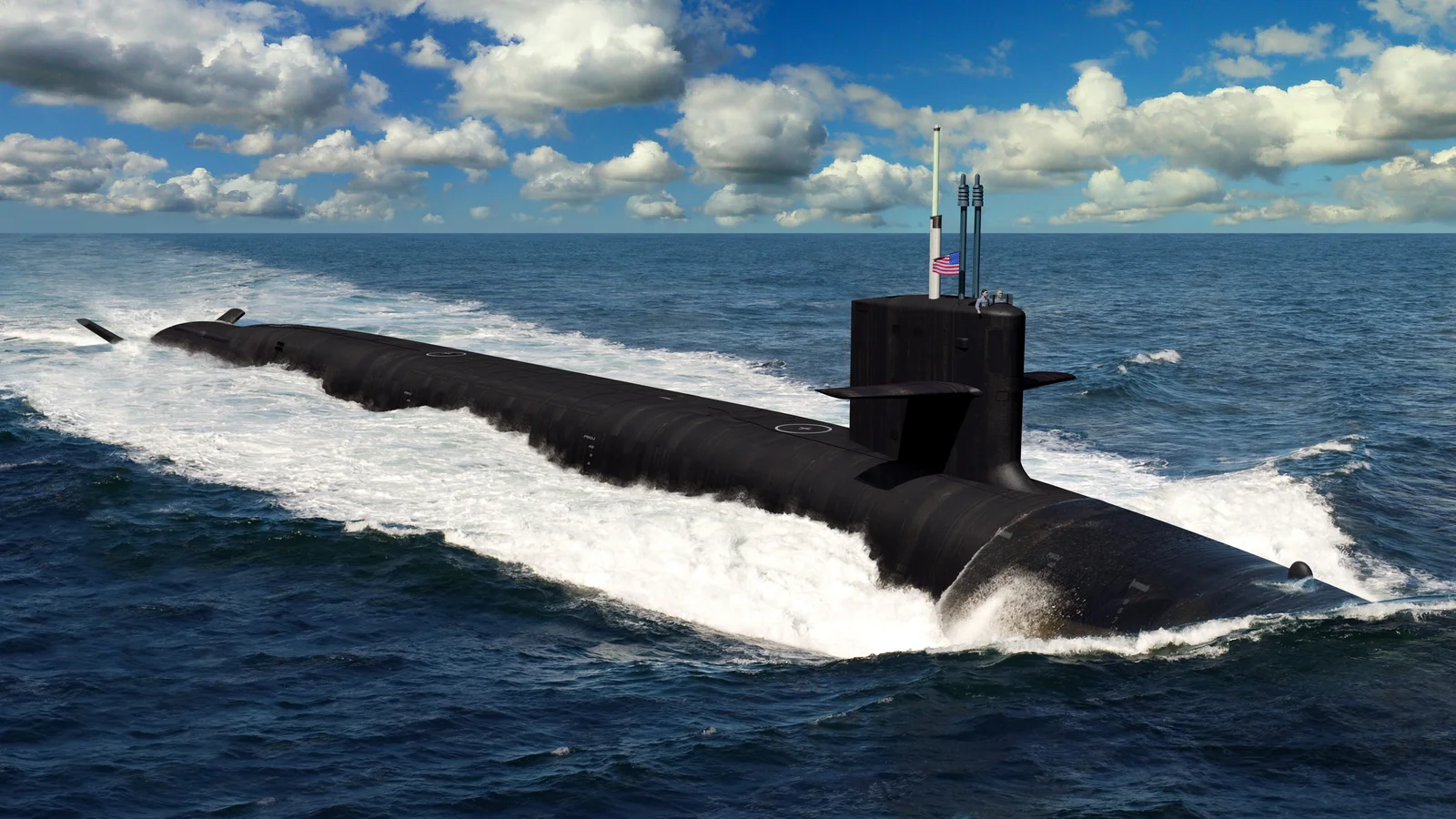
The execution of these gates is best understood through a concrete, documented example: the development of the Columbia-class ballistic missile submarine (SSBN-826), the Navy's program to replace the aging Ohio-class fleet. Its progression through the DoDI 5000.02 framework provides a clear illustration of how high-level decision authorities interact with major shipbuilding milestones.
The program's progression to its baseline establishment occurred over late 2016 and early 2017. On 4 November 2016, a Defense Acquisition Board review was chaired to evaluate the program's readiness to proceed. Following this comprehensive review, on 4 January 2017, the Under Secretary of Defense for Acquisition, Technology and Logistics, Frank Kendall, serving as the specific, named decision authority rather than just an abstract committee, signed the acquisition decision memorandum. This signature officially approved the program's Milestone B, explicitly authorizing entry into the detail-design and Engineering and Manufacturing Development phase, and formalizing its baseline parameters.
The program then entered the EMD phase, a period dedicated to finalizing the complex engineering required to translate the baseline into actionable shipyard blueprints. In August 2020, the program faced its next major hurdle. The program's milestone decision authority, operating under the title of the Under Secretary of Defense for Acquisition and Sustainment, conducted a thorough review of the program's progress, weighing the prime contractor's assertions of readiness against objective data.
The authority determined that the program had sufficiently reduced its technical and manufacturing risk. Crucially, it approved funding based on the Office of Cost Assessment and Program Evaluation's (CAPE) independent cost estimate, providing a rigorous, external check on the program office's internal budget projections. With these parameters satisfied, the authority formally approved the program to proceed with construction of the lead submarine, the USS District of Columbia (SSBN-826).
This August 2020 decision served precisely as the program's production/construction-start decision: functionally a Milestone C-equivalent gate. The exact formal terminology used in internal documentation at the time can vary depending on tailored acquisition pathways, but the mechanism served the same purpose as Milestone C: authorization to move from detail design into physical construction of the vessel based on a mature, stable design.
Analyzing the Timeline: EMD and the 3.5-Year Gap
For project managers accustomed to software development or lighter commercial manufacturing cycles, the duration of the EMD phase might seem protracted. There was a roughly 3.5-year gap between the Columbia-class Milestone B approval in January 2017 and its construction-start decision in August 2020. In the context of major defense acquisition, and specifically for a first-of-class nuclear-powered submarine, this duration represents a normal, expected timeline for detailed design and EMD.
A nuclear submarine is one of the most complex platforms built by modern industry. Translating a Milestone B baseline into a mature production design requires routing extensive electrical cabling, integrating complex acoustic damping systems, finalizing the layout of the propulsion plant, and resolving spatial conflicts within the pressure hull in three-dimensional modeling before physical construction begins. The 3.5-year gap represents the structural space required to execute this engineering workload: the time needed to ensure that when the construction-start decision is signed, the shipyards are working from stable plans, rather than discovering engineering conflicts while welding hull modules together on the shipyard floor.
Concurrency and the Diagnostic Value of Milestones
The relationship between Milestone B, the EMD phase, and the construction-start decision is directly tied to the concept of concurrency, covered in more depth elsewhere on this site. A Milestone B approval that happens before a design is genuinely mature is exactly the structural precondition for the concurrency risk pattern.
If a program sets its baseline and rushes into EMD without mature technology, the design will inevitably require continuous alteration. If it then rushes past a Milestone C-equivalent gate before the design is stable, those alterations have to be implemented on the production floor, causing rework, schedule delays, and cost growth. The DoDI 5000.02 milestone system exists specifically as the Department of Defense's internal checkpoint mechanism meant to prevent that from happening: when followed rigorously, it forces a program to mature its technology before Milestone B and stabilize its design during EMD before authorizing production.
Understanding these acquisition gates, and precisely what they require, provides a genuinely useful diagnostic tool for assessing program risk from the outside. External project management practitioners and analysts do not need insider access to decode the health of a program: reading public oversight documents such as Government Accountability Office (GAO) reports or Congressional Research Service (CRS) briefings against the lens of these statutory gates is enough.
If public reporting indicates that a program has passed Milestone B but notes that critical technologies remained immature at the time of the review, an outside project manager can diagnose a high risk of future concurrency and cost overruns: the baseline was set on an unstable foundation. Conversely, if reporting shows that a program's decision authority is deliberately delaying a Milestone C or construction-start decision because the detail design is not yet stable, the external analyst can recognize the milestone system functioning exactly as intended: the decision authority is absorbing a schedule delay upfront to prevent larger cost and schedule compounding during physical production.
The DoD acquisition gates are not merely administrative hurdles; they are the fundamental project management controls of the defense industrial base. The transition from Milestone B through the EMD phase to a Milestone C-equivalent gate represents the translation of strategic requirements into a tangible, mature design ready for the shipyards, and mapping a program's progression against these statutory checkpoints is a genuine way to evaluate the structural integrity and risk profile of some of the most complex engineering endeavors in the defense sector.