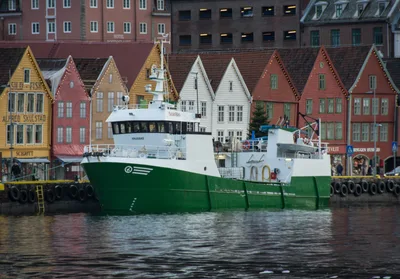
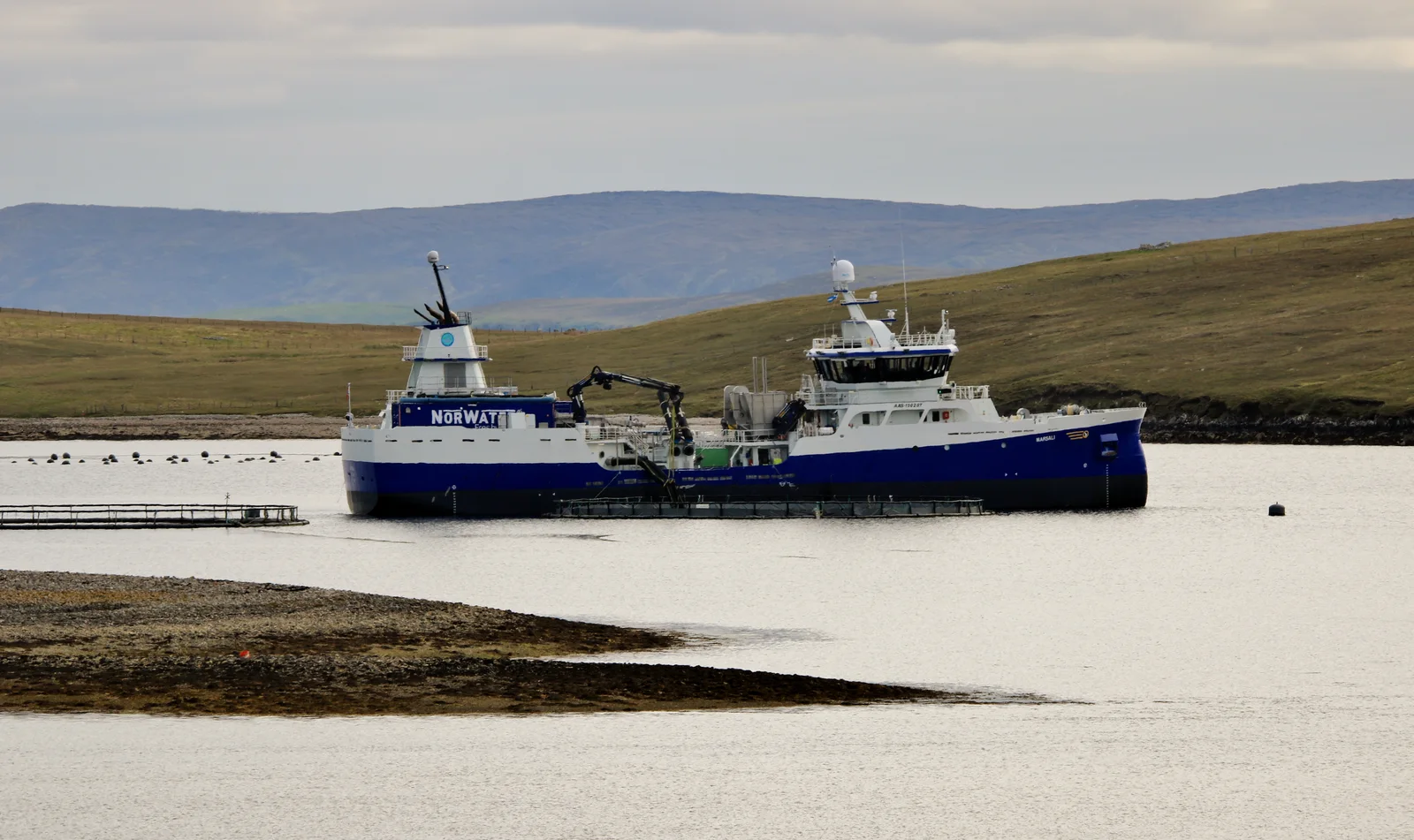
Live fish carriers for salmon farming are mostly built as complete, turnkey vessels at a small group of Norwegian and Turkish yards, with Spanish and Chinese builders newly entering the segment. This review traces named newbuild orders from 2021-2026 and tests the commonly assumed "cheap hull abroad, finished in Norway" pattern against verified cases.
A Vessel Built Around a Living, Fragile Cargo
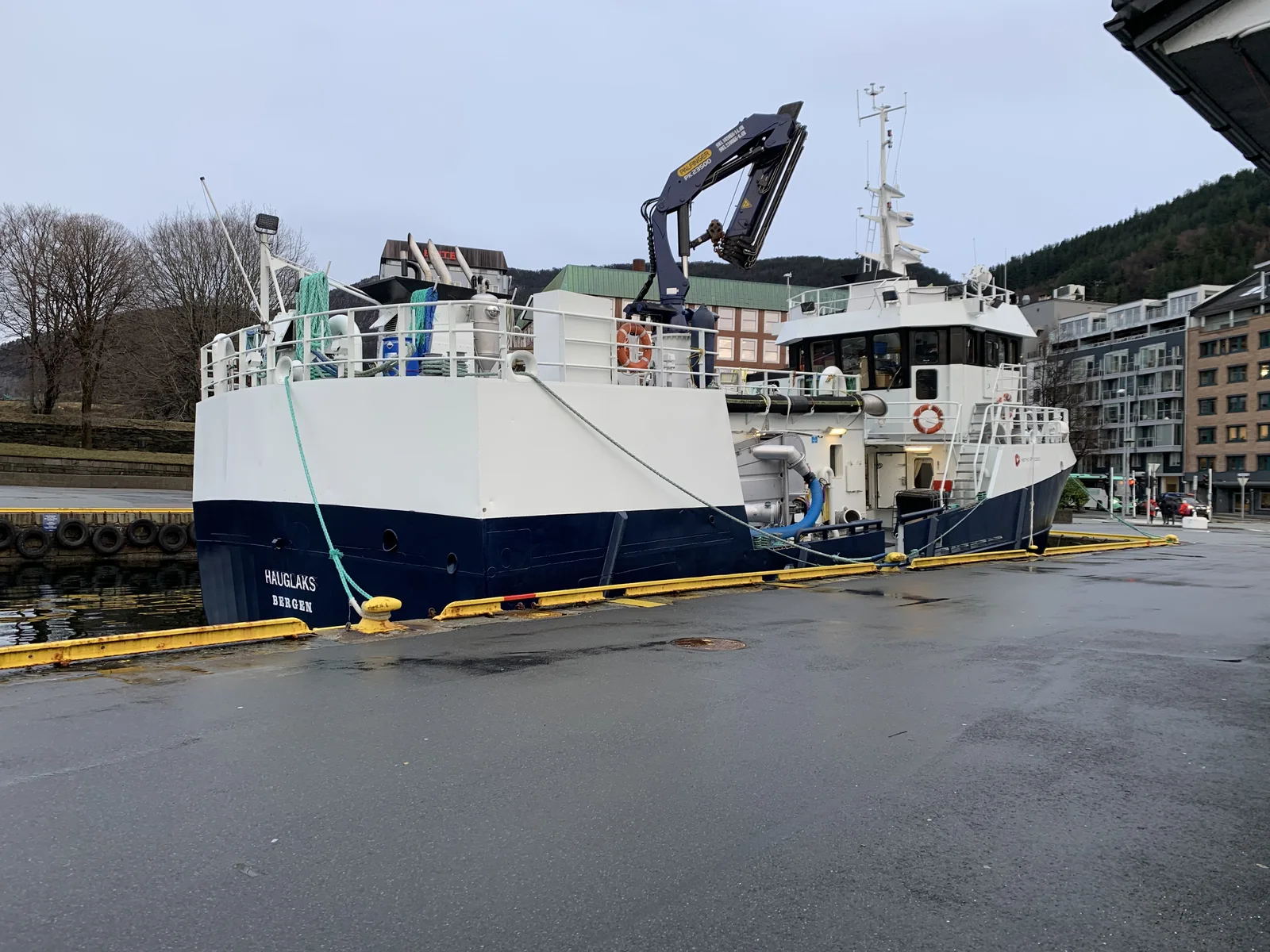
A live fish carrier, known in Norway as a brønnbåt and in English trade press simply as a "wellboat", is not a fishing boat. It carries no nets or trawls. Its entire hull and machinery layout exists to keep tens of thousands of live Atlantic salmon (and, on some routes, trout, cod or other farmed species) alive and unstressed while moving them between sea-cage sites, delousing/treatment stations and slaughter or processing plants. That single requirement, keeping cargo alive rather than just afloat, drives almost every construction decision: multiple sealed well tanks instead of open holds, closed-loop seawater circulation and oxygenation systems, onboard water treatment and disinfection plants, and increasingly, dynamic positioning (DP) equipment so the vessel can hold station next to a fish farm without dropping anchor into the cage moorings. Because the fish-handling and water-treatment systems (often supplied by specialists such as MMC First Process, Hydroniq Coolers or Optimarin) can represent a large share of total newbuild cost, wellboats are usually built to naval-architecture designs from a small group of Norwegian specialist houses: Salt Ship Design, HAV Design, Kongsberg Maritime's ship design arm and KNUD E. HANSEN among them, even when the steel is cut somewhere else entirely.
Norway still builds a large share of its own fleet
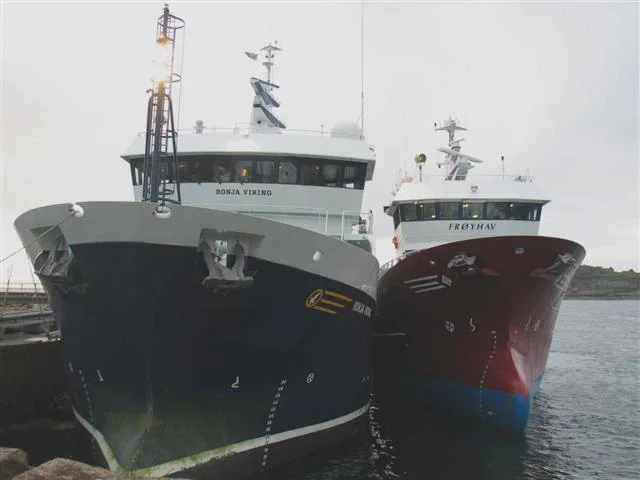
A cluster of small and mid-sized Norwegian yards on the west coast continues to build wellboats end-to-end, from steel-cutting through outfitting and delivery. Fitjar Mekaniske Verksted (FMV), south of Bergen, has built wellboats, workboats and fishing vessels since the 1970s and is currently constructing a 5,000 m³ hybrid live fish carrier for the aquaculture logistics operator North Salmon Service, designed by HAV Design (the HAV 595 platform) with a battery pack and variable-speed generators, for delivery in 2027, according to Fish Farming Expert's coverage of the order. Myklebust Verft, at Gursken on Sunnmøre, has built a series of Kongsberg NVC 390 LFC-design wellboats of around 4,000 m³ for Sølvtrans: the fourth in that series, "Ronja Nærøysund," was reported by Norwegian trade outlet iLaks as the yard's build number 76; iLaks and Metal Supply both cited a combined build programme value "approaching two billion kroner" across the Sølvtrans-Myklebust series, though that aggregate figure comes from Norwegian trade press rather than a disclosed contract price and should be treated as an approximate, secondary-source estimate. Aas Mek. Verksted, another long-time Sølvtrans supplier, has delivered close to 40 vessels to that one customer over the years, including the 3,000 m³ "Ronja Vita" (its 214th newbuild), a lower-draft design aimed at smolt transport. Larsnes Mekaniske Verksted, historically a fishing-boat yard, delivered its first aquaculture wellboat in 2009 to Rostein AS (at the time reported as the world's largest); Rostein subsequently became majority owner of the yard in 2014 and has continued ordering hybrid wellboats there, according to Norwegian outlet Intrafish.no.
Turkey has become the leading export builder of complete wellboats
Since roughly the mid-2010s, a handful of Turkish yards clustered in Yalova province have taken over a large share of newbuild wellboat construction for Norwegian, Faroese and other owners, and importantly, they deliver complete, ready-for-service vessels rather than bare hulls. Sefine Shipyard describes itself as the global leader in live fish carrier construction (a self-reported claim from the company's own site, not an independently audited ranking, though it is consistent with its order history). Sefine has built, among others: the "Aqua Maløy" and "Aqua SPA" pair (3,500 m³ each) for DESS Aquaculture Shipping, launched together in December 2018 and delivered in 2019; "Ronja Follafoss" for Sølvtrans, a 92.5-metre, 5,000 m³ hybrid diesel-electric vessel with delousing capability, per Baird Maritime's vessel review; and "Bakkafossur," a 109-metre hybrid vessel for the Faroese salmon farmer Bakkafrost, delivered in 2023: reported variously as a 7,000 m³ or a 10,000 m³ combined well-tank vessel carrying roughly 1,000 tonnes of live salmon in different trade-press write-ups (KNUD E. HANSEN, the vessel's designer, and Fish Farming Expert give slightly different capacity figures, which is flagged here rather than resolved). Tersan Shipyard, also in Yalova, built a series of LNG/battery-hybrid live fish carriers for Nordlaks, including "Harald Martin" (delivered October 2021, 84 m, 4,300 m³, LNG engines plus a Corvus Energy battery pack, DP from Rolls-Royce) and its sister "Bjørg Pauline." Cemre Shipyard (Cemre Marin Endüstri), also Yalova-based, built the hull of "Ronja Storm" (see below) and, more recently, "Seigrunn" for Seistar Holding: an 8,000 m³ vessel delivered in 2024 that multiple outlets, including SalmonBusiness, described as one of the world's largest wellboats at the time.
Does the "cheap hull abroad, finish in Norway" pattern actually apply here?
This is a well-documented pattern in other segments of Norwegian-owned shipbuilding: for example, the fishing vessel "MS Smaragd," whose hull was fabricated in Poland (Stocznia Gdańska) in the late 1990s and towed to Solstrand AS in Norway for outfitting, per a contemporary Skipsrevyen report. But for wellboats specifically, the evidence gathered here does not support that as the dominant model. The more common arrangement, in both the Norwegian-yard cases above and the Turkish-yard cases above, is a single yard building the complete vessel, hull and outfitting together, and delivering it ready for service. The clearest documented exception is "Ronja Storm," a 116-metre, 7,450 m³ wellboat for Sølvtrans: its hull was built at Cemre Shipyard in Turkey and then towed to Havyard in Norway for outfitting and completion, ahead of a ten-year charter to Tasmania's Huon Aquaculture, according to Fish Farming Expert's January 2019 report on the launch. That is a genuine, verified instance of the "hull abroad, finish in Norway" model being used for a wellboat, but it appears to be an exception tied to that vessel's unusual size and complexity at the time, rather than the norm. One secondary source, a 2022 Norwegian maritime-industry value-creation report referenced in search results, reportedly stated that Norwegian yards built more than 70 percent of all brønnbåter from 2010 onward, with the remainder split across Spain, Turkey and Poland; this could not be directly retrieved and verified against the original report's text (the source page failed to load), so that specific percentage should be treated as unconfirmed rather than fact.
Spain and the newest entrant, China
Murueta Shipyard in Spain has moved into the segment: Norwegian aquaculture-services group Frøy contracted Murueta in 2025 to build an 87.7-metre, 4,500 m³ "NextGen" wellboat with a redesigned, more energy-efficient well-circulation system and what is reported as the world's first "Cyber Secure (+)" class notation, for delivery in autumn 2027, according to Baird Maritime and Euronext company announcements. The more significant recent shift, though, is the arrival of large Chinese shipbuilders in a niche long dominated by European yards. Frøy has also ordered wellboats from Nantong Rainbow Offshore & Engineering Equipment in China: two firm vessels of 4,500 m³ each, with options for four more, in a programme trade outlet Undercurrent News reported was valued at up to $489 million and followed Frøy's evaluation of 17 international shipyards, while Norway's newly formed Pelican Aqua Holding has contracted CIMC Raffles, at Yantai, for four firm 5,000 m³ live fish carriers with options for up to six more, both series beginning delivery in 2029. In both Chinese cases, the underlying naval architecture and fish-handling technology remain Norwegian: Salt Ship Design and MMC First Process are named as design and systems partners on the Pelican Aqua/CIMC Raffles vessels, while the steelwork and assembly move to a larger-scale, lower-cost industrial base. Whether this becomes a lasting shift or a one-off response to yard capacity constraints in Norway and Turkey is not yet established; the vessels in question have not been delivered.
Bigger tanks, tighter biosecurity: what the design brief now demands
Well/cargo capacity has grown roughly tenfold over three decades of newbuilds referenced in a January 2021 SalmonBusiness retrospective: from around 70 tonnes of live-fish capacity on an early 1990s vessel, to "Ro Master" at roughly 2,800 m³ in 2007 (described at the time as the largest wellboat afloat), to "Ronja Storm" at 7,450 m³ in 2019, to "Seigrunn" at 8,000 m³ delivered in 2024. It is worth noting, however, that the newest Spanish and Chinese orders described above (4,500–5,000 m³) are smaller than the largest vessels already in service: suggesting the current design push is less about a straightforward race to the biggest tank and more about efficiency, biosecurity and propulsion per cubic metre carried.
From open transport to closed and semi-closed systems
Open-well transport, in which farm seawater is drawn straight through the vessel with no disinfection, is no longer permitted in Norwegian waters for biosecurity reasons; a 2015 Norwegian Veterinary Institute technical report on disease transfer risk via wellboats was an influential part of the regulatory push behind this. Newer builds, including the Sefine- and Tersan-built vessels described above, are specified with onboard water treatment, UV or other disinfection, and in several cases fitted or fittable delousing/treatment equipment (as on "Ronja Follafoss"), moving the fleet toward semi-closed or closed-tank operation rather than continuous open exchange with the sea the vessel is transiting.
Hybrid and battery-electric propulsion
Diesel-electric and diesel-LNG hybrid propulsion, paired with battery packs, now appears on a majority of the newbuilds identified in this research: Nordlaks' Tersan-built LNG/battery pair ("Harald Martin," "Bjørg Pauline"), Rostein's Larsnes-built hybrid vessels, Bakkafrost's "Bakkafossur" (five diesel engines plus battery), and the Fitjar-built North Salmon Service vessel (variable-speed generator sets, DC distribution and a large battery pack). The stated purpose across all of these, per the shipyard and owner press material cited above, is reduced fuel burn and lower CO2/NOx output rather than fully electric, zero-emission operation: none of the vessels found in this research is battery-only, and range/charging-infrastructure limits were cited as a constraint in broader reporting on hybrid fishing and aquaculture vessels.
What the current order book suggests
Taken together, the picture that emerges is of a build market split three ways rather than following one simple template. A core of Norwegian yards, Fitjar, Myklebust, Aas Mek., Larsnes, continues to build complete wellboats domestically, largely for repeat customers like Sølvtrans and Rostein. A cluster of Turkish yards in Yalova, Sefine, Tersan, Cemre, has taken over a large share of newbuild volume for Norwegian and Faroese owners over roughly the past decade, again delivering complete vessels rather than bare hulls. And, most recently, Spanish (Murueta) and Chinese (CIMC Raffles, Nantong Rainbow) yards have entered the segment for the first time on firm contracts with named 2027–2029 delivery windows, pairing outside steelwork with Norwegian design and fish-handling technology. The "hull built cheap abroad, towed to Norway to finish" model that shows up elsewhere in Norwegian shipbuilding is documented in at least one high-profile wellboat case (Ronja Storm/Cemre/Havyard) but is not, on the evidence gathered here, the standard way these vessels are built; single-yard, turnkey delivery, wherever that yard is located, looks like the more common arrangement today.
For the commercial side of this picture, who owns and operates these vessels, and where the market is actually heading, see our companion report: Inside the Wellboat Fleet.
Cover photo: Ronnie Robertson, via Wikimedia Commons, licensed CC BY-SA 2.0.