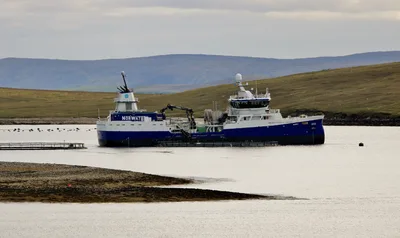
Specialized "wellboat" vessels move farmed salmon between sea cages, treatment sites, and processing plants - and a handful of Norwegian operators, now backed by international infrastructure capital, dominate the fleet. This report traces fleet growth, ownership, and the demand forces reshaping the sector.
The commercial engine of Atlantic salmon farming is not the net pen or the feed barge: it is the wellboat. Also called a live fish carrier, or brønnbåt in Norwegian, this class of specialized vessel moves smolt to sea, shuttles adult fish between farm sites, carries them to slaughter, and increasingly serves as a floating treatment plant for sea lice. As farmed salmon and other aquaculture species have grown into a multi-million-tonne global protein industry, the fleet that services it has quietly become one of the more capital-intensive, consolidated, and closely watched niches in specialized shipping.
A niche with no agreed price tag
Unlike container shipping or tankers, the live fish carrier segment does not have a standardized, independently audited market-size figure that the industry treats as authoritative. A search of generic market-research publishers turns up wildly inconsistent numbers: one report puts the "global live fish carrier market" at roughly $3.7 billion in 2025 growing to $5.97 billion by 2035; another estimates around $2 billion in 2025; a third puts 2023 at $1.5 billion rising to $2.6 billion by 2032. These figures come from syndicated market-research firms (FactMR, DataInsights Market, Dataintelo, and similar publishers) that produce templated reports across hundreds of niche categories, and none of them disclose a transparent methodology for how they arrived at a wellboat-specific figure. Given that the three estimates disagree by more than 2x for overlapping years, none should be treated as reliable, and readers should treat any single-sentence "the market is worth $X billion" claim about this sector with real skepticism until a named, methodologically transparent source (such as Clarksons Research, VesselsValue, or Kontali Analyse) publishes one specifically for wellboats: as of this research, none of those three appears to have done so publicly.
What is verifiable instead is the value of individual transactions and fleets, which gives a much more concrete sense of scale. When Goldman Sachs Asset Management acquired a 72.11% stake in the Norwegian aquaculture service company Frøy from salmon farmer SalMar in a deal completed in August 2023, the transaction valued Frøy, which operates a fleet of 17 wellboats alongside other service vessels, at roughly NOK 6.6 billion (about $595 million at the time), according to SalMar's own disclosures and reporting by Fish Farming Expert. That single company valuation gives a real, dated anchor point for what a mid-sized modern wellboat fleet is considered worth by sophisticated financial buyers, even without a sector-wide total.
Fleet growth: from a handful of boats to a specialized armada
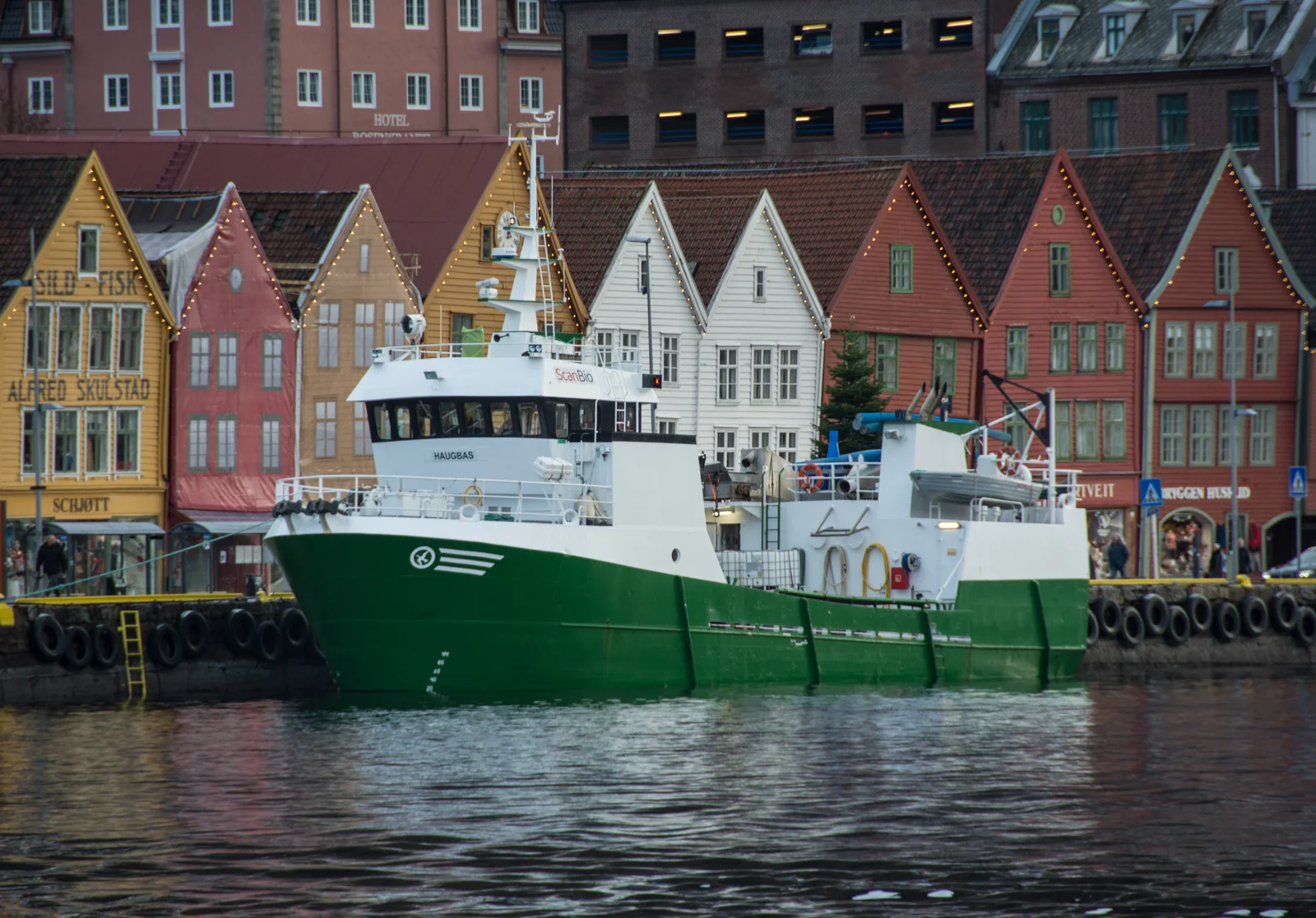
The clearest, best-sourced trend is fleet growth and vessel size inflation over roughly the last decade and a half. Aquaculture data firm Manolin, in a widely cited analysis published in January 2021 (and republished by SalmonBusiness), found that Norway's wellboat fleet had grown sixfold over the preceding nine years, i.e., roughly from the early 2010s to 2020, driven initially by transport demand and increasingly by the vessels' second role as mobile delousing units. That data point is now several years old, so it should be read as describing the growth trajectory through 2020 rather than the current fleet size.
Newbuild activity has stayed strong since. Individual company fleets illustrate the pace: Sølvtrans, per its own 2026 disclosures tied to a private-equity ownership change (detailed below), has grown from 21 vessels in 2018 to 48 vessels in 2026, with eight more under construction and further newbuild options secured. Rostein's fleet stood at 16 vessels as of the period covered by trade press reporting, after investing roughly NOK 3.5 billion in new Norwegian-built tonnage over the preceding decade. AquaShip/Intership, formed by a December 2023 merger, combined a 28-vessel fleet including nine wellboats (with two more under construction) into a combined 39-vessel service-vessel operator. Individual vessel capacity has also risen sharply: from a few hundred cubic metres of live-well volume in older vessels to modern newbuilds in the 7,500–8,000 m³ range, such as Frøy's Gåsø Høvding (7,500 m³, delivered 2021) and Seistar's Seigrunn (8,000 m³, delivered 2024), each repeatedly described in trade press as among the largest wellboats built to date at the time of delivery: a title that keeps changing hands as bigger vessels enter service, which is itself a signal of how fast the newbuild race has moved rather than a fixed record.
Norway's dominance is real, but concentrated in a handful of companies
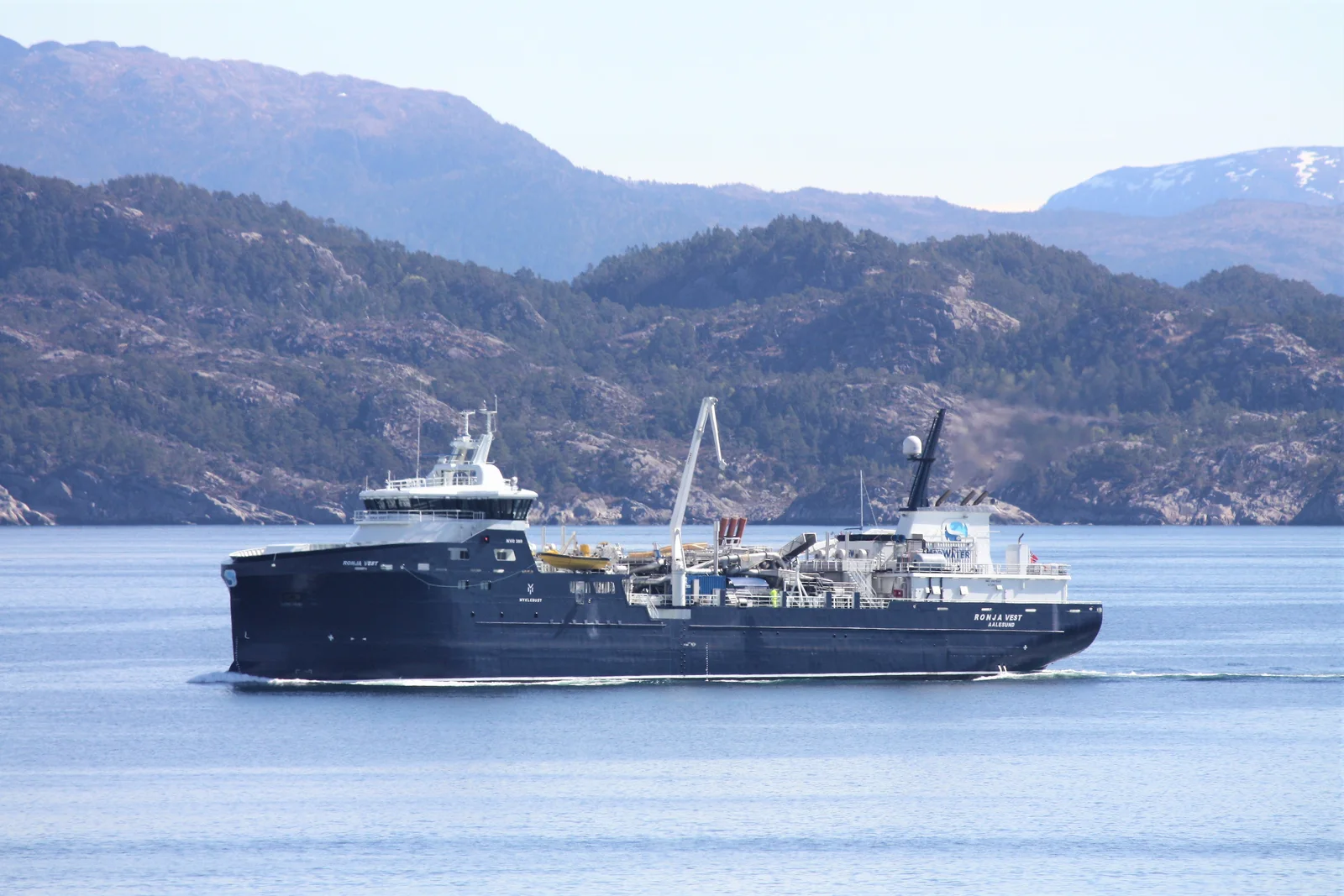
The premise that Norway dominates ownership and operation of this fleet holds up under scrutiny, and it is concentrated among a fairly small number of named operators rather than spread across the whole Norwegian shipping sector. Sølvtrans describes itself, in materials tied to a 2026 transaction (UK infrastructure fund GLIL Infrastructure acquiring a 30% stake from existing majority owner Antin Infrastructure Partners), as "the world's #1 provider" of wellboats, with a 48-vessel fleet serving Norway, Scotland (nine vessels), Canada, Iceland and New Zealand, plus exposure to farmed cod alongside salmon. Sølvtrans's own "About" page separately lists Tasmania, Australia among its markets: the two most recent public statements don't list an identical set of countries, which may reflect real portfolio changes over time rather than an error, but it means any specific country list attributed to Sølvtrans should be treated as approximate and dated rather than fixed.
Rostein is the other historically dominant name: a Manolin/SalmonBusiness analysis of 2020 treatment activity found Rostein's vessels alone accounted for almost 28% of all sea-lice and other treatments carried out by wellboats in Norway that year, with Rostein's Ro Server and Ro West individually among the most active vessels in the country. Frøy (17 wellboats, now owned by Goldman Sachs Asset Management since 2023) and the AquaShip/Intership combine (backed by US private equity firm American Industrial Partners since the 2023 merger) round out the largest operators. A smaller but notable player is Seistar, a 50/50 joint venture between salmon farmer Lerøy Seafood Group and Bakke Brothers, operating a handful of vessels including some of the largest-capacity wellboats delivered to date. Separately, Napier, founded in 1995 and describing itself as "Norway's leading aquaculture service vessel operator", specializes specifically in harvest vessels (vessels that move fish to slaughter rather than live transport/treatment between farm sites); it is adjacent to, but not fully interchangeable with, the core live-transport wellboat fleet discussed here, and its newest vessel, Tauroa, was delivered in 2025 with a seventh vessel under construction in Spain for 2027 delivery.
Beyond Norway: charter, not always domestic ownership
The research does not support treating other major salmon-farming regions as having fully independent domestic wellboat fleets: the pattern is closer to Norwegian-owned or Norwegian-heritage operators serving those markets under charter or subsidiary structures, with some real exceptions.
- Scotland: Sølvtrans supplies and crews vessels specifically adapted for Scotland's shallower sea lochs (a design constraint trade press has covered directly), and AquaShip/Intership also lists Scotland among its operating countries. This looks like charter/subsidiary presence from Norwegian-rooted operators rather than a distinct Scottish-owned fleet.
- Faroe Islands: This is the clearest exception. Bakkafrost, the dominant Faroese salmon farmer, owns and operates its own fleet of "farming service vessels," including the 109-metre hybrid Bakkafossur (delivered December 2022, up to 10,000 m³ combined well capacity across four tanks): a vertically integrated, farmer-owned model rather than a chartered one.
- Chile: Also shows more domestic/regional ownership than initially assumed. Chilean salmon farmers including AquaChile and the Detroit Group operate their own wellboats (e.g., Detroit's Eir and Var, roughly 2,000 m³/270-tonne capacity vessels), several of them built at Brazilian yards rather than chartered from Norway, though Sølvtrans's own materials also list Chile-adjacent expansion in past disclosures, so some Norwegian-operator presence likely coexists with Chilean-owned tonnage.
- Canada: Appears to rely heavily on vessels built for and operated by the local subsidiaries of Norwegian-owned salmon farmers: for example, Mowi Canada West's wellboat Aqua Tromoy, whose "Aqua" naming convention matches AquaShip/Intership's fleet naming pattern, suggesting it is likely a chartered or subsidiary-operated vessel rather than an independently Canadian-owned one, though the ownership chain could not be fully confirmed.
- Australia (Tasmania): The two large wellboats serving Tasmanian salmon farmers, Ronja Storm (used by Huon Aquaculture) and Tassal's Aqua Spa, again carry naming conventions ("Ronja" is Sølvtrans's house prefix) pointing to Norwegian-operator charter arrangements rather than Australian ownership, consistent with Sølvtrans's own listing of Tasmania as a market.
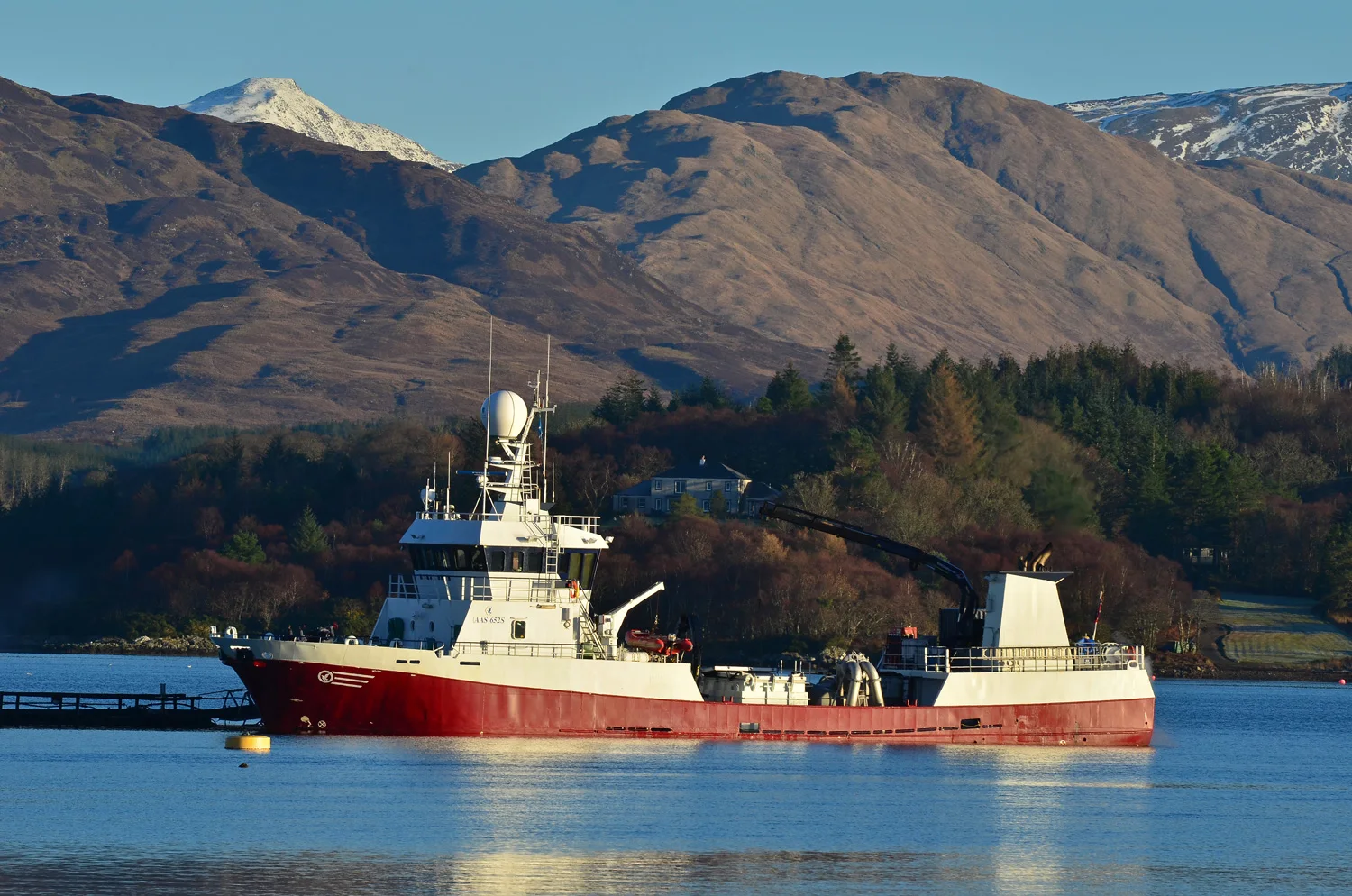
Overall, the evidence points to Norway (plus, to a lesser extent, Turkey and Brazil as build locations rather than owners) as the center of gravity for wellboat ownership, with Faroese and Chilean farmers as the more notable exceptions running their own tonnage.
Consolidation and private capital have moved into the sector
Three separate, dated transactions show that infrastructure and private-equity investors now treat wellboat fleets as a distinct, financeable asset class rather than a sideline of salmon farming: SalMar's sale of its 72.11% Frøy stake to Goldman Sachs Asset Management (completed August 2023, ~NOK 6.6bn headline value); the December 2023 merger of AquaShip and Intership under American Industrial Partners; and, most recently, Antin Infrastructure Partners' agreement to sell a 30% stake in Sølvtrans to UK pension-backed infrastructure fund GLIL, with Antin (which first invested in 2018, when Sølvtrans had 21 vessels) remaining the majority owner alongside founder Roger Halsebakk's family. This pattern of infrastructure-fund ownership, treating wellboats more like ports or toll roads than conventional shipping assets, on the logic of long-term, contracted cash flows from salmon farmers, is itself a notable and verifiable market signal, independent of any disputed market-size figure.
What is driving demand
Two demand drivers are well documented by name. First, sea lice management: Norway regulates salmon farming capacity through a "traffic light" system that assesses sea-lice risk to wild salmon by production area, and aquaculture data firm Manolin's ongoing analysis describes recent mobile lice pressure tracking at levels similar to prior record years, with treatment patterns shifting toward more frequent, smaller, fragmented delousing operations rather than large synchronized ones: a pattern that increases, rather than decreases, the operational calls on wellboat capacity and scheduling, according to Manolin's reporting. Second, underlying biomass growth: Kontali Analyse, a Norwegian aquaculture data firm whose figures are widely cited by Rabobank and trade press, forecast global Atlantic salmon production crossing 3 million tonnes for the first time in 2024 and growing further in 2025, driven mainly by a Norwegian and European production recovery, though Kontali and Rabobank's own commentary has also flagged headwinds that could keep supply growth flatter than forecast, so this should be read as a directional forecast rather than a locked-in outcome.
A third, more structural driver is the shift toward offshore and more wave-exposed farming sites, which DNV: the Norwegian classification society active in aquaculture vessel certification and biosecurity inspection: has written about as requiring larger, more robust vessels and infrastructure able to operate in stronger currents and higher waves. This is a plausible and well-sourced directional trend (bigger, more capable wellboats for harder sites) rather than a quantified forecast; DNV does not appear to have published a specific "X new wellboats by year Y" projection.
Where this leaves the outlook
The honest picture is one of strong, well-evidenced fleet and vessel-size growth, real and increasingly concentrated Norwegian corporate ownership backed by international infrastructure capital, and clear operational demand drivers: set against a near-total absence of an authoritative, named market-size estimate specifically for this vessel class. Anyone citing a dollar-value "wellboat market size" should be asked which named research house produced it and when; based on this research, no single such figure currently commands broad industry credibility, and the more reliable evidence of the sector's health lies in fleet counts, newbuild orders, and transaction values from named companies and deals, all of which point toward continued consolidation and capacity growth through the back half of this decade.
For the construction side of this picture, which yards actually build these vessels and whether the "cheap hull abroad" pattern applies: see our companion report: Where Live Fish Carriers Are Actually Built.
Cover photo: Gordon Leggett, via Wikimedia Commons, licensed CC BY-SA 4.0.