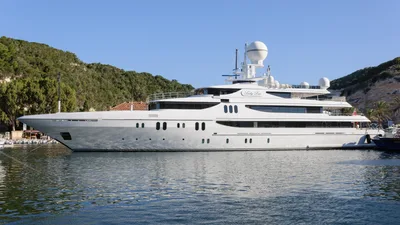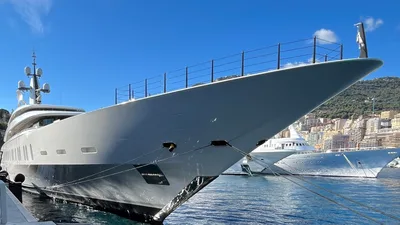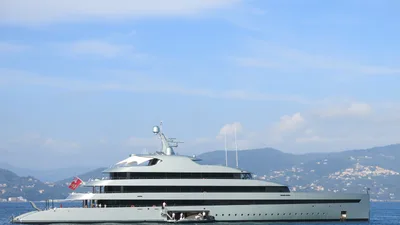
Italy now builds over half the world's 24-metre-plus yacht order book, the Netherlands and Germany specialize in the largest custom projects, and Turkey has become the industry's fastest-growing challenger - while offshore wind vessel construction is split between a self-contained Chinese fleet, European/Korean-built vessels, and a small, costly Jones Act-compliant US segment.
Superyachts: A Concentrated, Shifting Map
Superyacht construction remains one of the most geographically concentrated segments in shipbuilding, but the concentration is not static. According to Boat International's Global Order Book 2026 (the annual industry census of all yachts over 24 metres on order or in build, contracts signed before 1 September 2025, published mid-December 2025), Italian yards now account for roughly 52 percent of the global 24-metre-plus order book by unit count: 568 yachts out of the total counted. That is a striking level of dominance for a single country, and it has grown rather than shrunk in recent years.
Within Italy, one group stands well above the rest. The Azimut|Benetti Group topped the Global Order Book's builder ranking for the 26th consecutive year in the 2026 edition, with 163 yachts under construction totaling 5,924 metres of combined length: about 23 percent of the entire global market the report tracks. Sanlorenzo, whose order book now includes the Finnish/Italian sailing brand Nautor Swan following an acquisition, ranked second with 130 yachts and 4,698 metres. The Ferretti Group and The Italian Sea Group (owner of Admiral, Tecnomar, Picchiotti and the revived Perini Navi brand) round out the next tier, though industry coverage of the report describes "a large gap" in average vessel size between the top two builders and the rest.
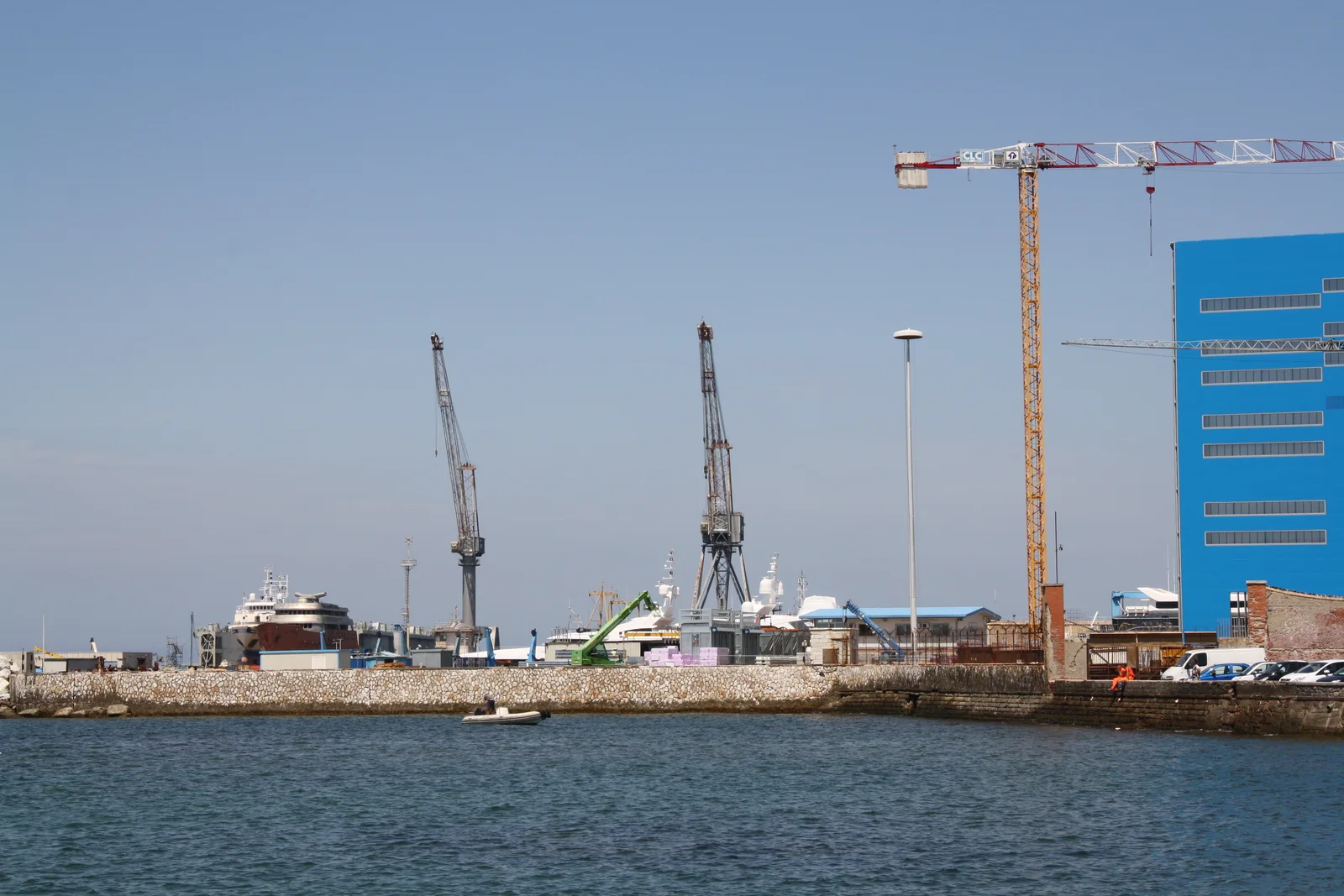
The Netherlands tells a different story: fewer boats, but much bigger and more expensive ones. In the same 2026 Global Order Book, Dutch yards show only 66 yachts under construction against Italy's 568, but those 66 yachts add up to 107,796 gross tons, reflecting the country's focus on very large, fully custom projects at yards like Feadship, Oceanco and Damen's Amels/Damen Yachting brand. A 2025 report from Dutch bank ABN AMRO, cited by trade publication SWZ Maritime, states that the Netherlands was the world's largest builder of yachts over 80 metres in 2024: a single-source claim worth treating as an estimate rather than an audited figure, but directionally consistent with the order-book data and with the country's long-standing reputation for engineering-heavy megayacht projects.
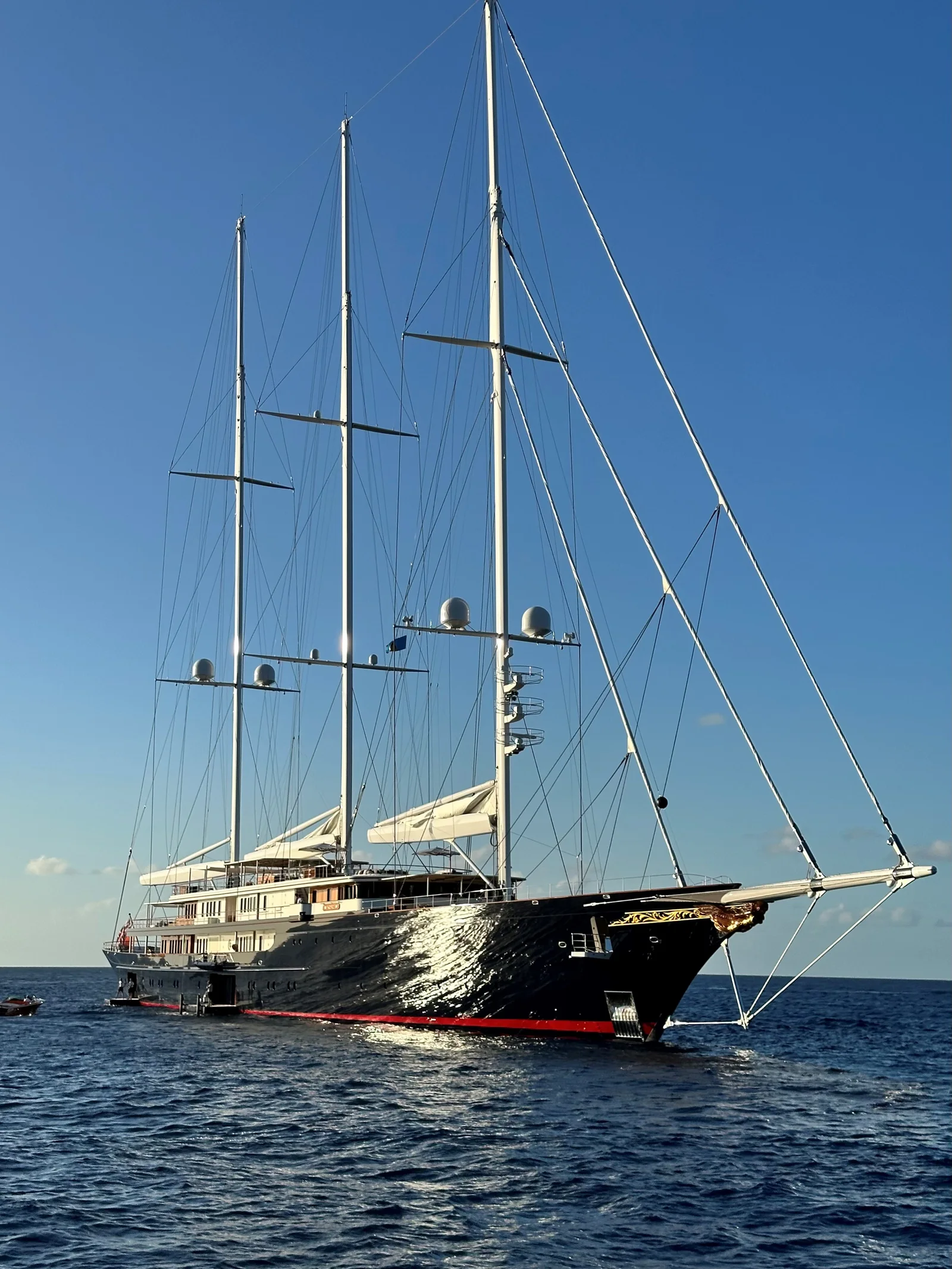
Germany occupies a narrower but even more extreme niche: only 18 yachts in the 2026 order book, but 78,651 gross tons: the highest average size of any major producing nation. This is almost entirely a function of one yard, Lürssen, based in Bremen with facilities across several German sites, which built Azzam, still widely cited as the longest yacht in the world at roughly 180 metres (sources vary slightly on the exact figure, and no more recent yacht has publicly displaced it as of this writing).
Turkey's rise is real, not hype
The idea that Turkish yards are becoming serious players in superyacht construction is well supported by the data, not just marketing copy from Turkish builders. Boat International's Global Order Book 2025 reported that Turkey ranked second globally by number of new yacht orders, behind only Italy, with 146 projects in build, 32 more than the prior year, totaling 6,410 metres of combined length. The 2026 edition shows Turkey with 141 yachts and 82,383 gross tons, a broadly similar position; shipyard trade press attributes some of this to heavy infrastructure investment and Turkish yards increasingly partnering with internationally known exterior and interior designers, closing the finish-quality gap with Western European builders that reviewers previously cited as Turkey's weak point. Poland is a smaller but distinct story: catamaran-focused builder Sunreef Yachts, based in Gdańsk with a second yard in the UAE, climbed to sixth place in the 2026 order book with 41 projects and 1,185 metres of combined length: the only catamaran specialist in the report's top tier.
Ownership churn and a confirmed hull-abroad pattern
The competitive landscape shifted meaningfully in 2025. Oceanco, one of the Netherlands' flagship full-custom builders, changed hands in August 2025: Valve Corporation co-founder Gabe Newell acquired the yard from Oman's Barwani family, which had owned it for roughly fifteen years. It is too early to know what, if anything, changes operationally at Oceanco as a result, and this should be watched rather than assumed to be settled.
On the specific question of whether a "build hull abroad, outfit at home" pattern exists in superyachts: it does, concretely, at Damen Yachting. The company's semi-custom Amels 80 series has its steel hulls built at Damen's own hull-fabrication yard in Galați, Romania, then each hull is transported to the Netherlands, where it is outfitted and finished at Damen Yachting's Vlissingen facility: a sequence documented repeatedly in the company's own press releases each time a new hull arrives, most recently in early 2026. This is a genuine, named, verifiable example of the pattern the sector as a whole is sometimes assumed to follow, but it should not be generalized to Feadship, Lürssen or the major Italian builders, none of which were found in this research to publicly source hulls from lower-cost countries in the same way; their full-custom projects are generally built and outfitted at the same domestic yard.
Offshore Wind and Support Vessels: A Structurally Divided Market
The geography of offshore wind installation vessel (WTIV) and offshore support vessel construction looks nothing like the superyacht map. Instead of one country dominating by finish quality and brand, the market is split by an accident of industrial policy and cost structure, and increasingly, by trade law.
China builds the volume; Europe and Korea build for the rest of the world
A January 2026 scenario study by the Kuehne Climate Center, produced with consultancy Panticon and reported by trade outlet offshorewind.biz, describes the global WTIV fleet as "structurally divided." China's largely self-contained fleet, built domestically and serving mostly its own offshore wind buildout, is assessed by the study as capable of supporting roughly 225 gigawatts of installed capacity by 2030 without much additional investment. The non-Chinese fleet, vessels that are internationally classed and operated mainly by European contractors such as Cadeler and DEME, deployed across projects worldwide, would need sustained investment of an estimated €2.5–4 billion per year over three years to reach around 175 gigawatts of enabled capacity by the same date; without that investment, the study caps the non-Chinese fleet's potential at roughly 140 gigawatts.
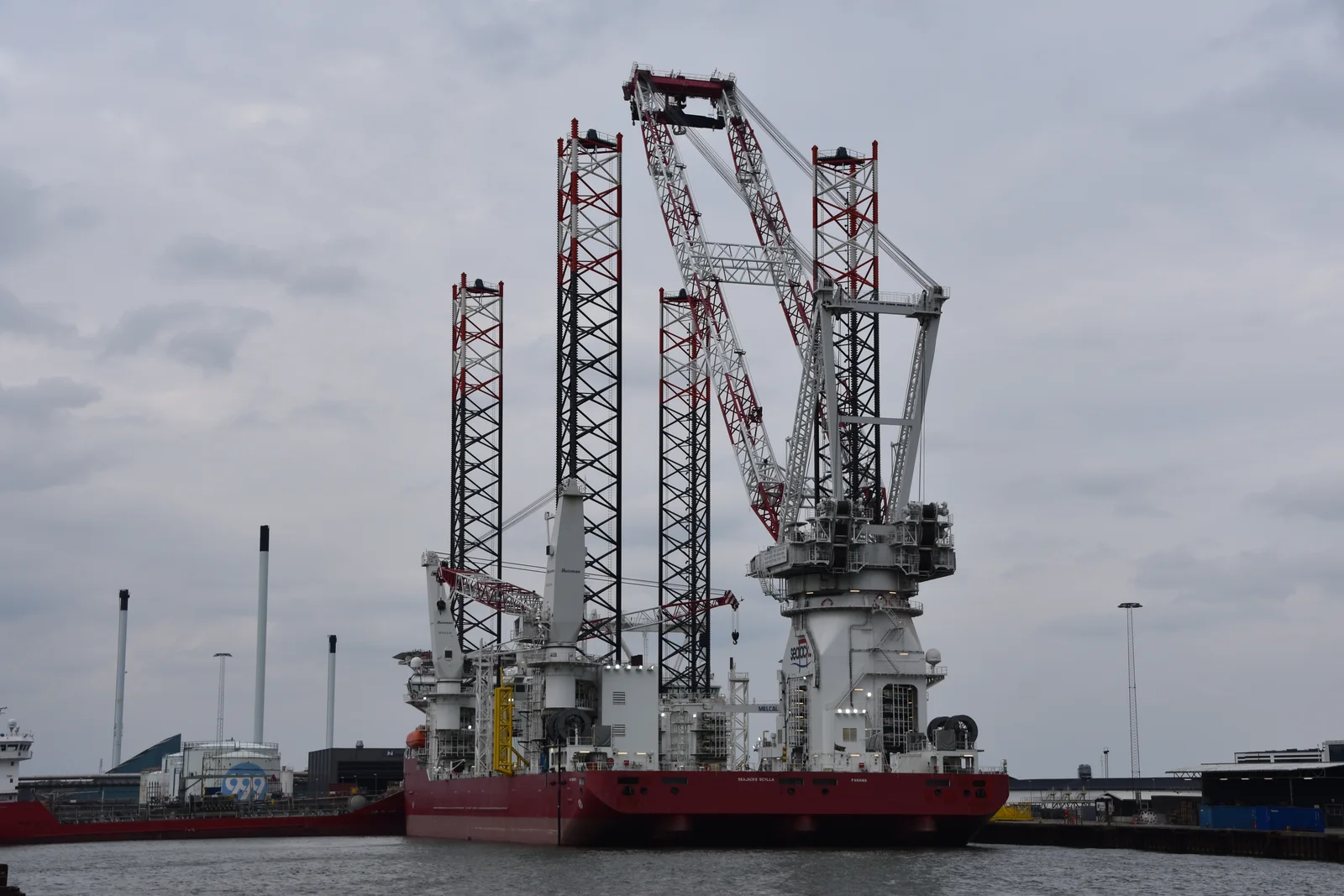
Recent real newbuild activity illustrates this split clearly. Chinese yard Yantai CIMC Raffles Offshore, in Shandong province, delivered the Boreas to Dutch contractor Van Oord in January 2025: described at the time as the world's largest offshore wind installation vessel, at 175 metres long with a 155-metre boom capable of lifting over 3,000 tonnes, four 126-metre legs, and dual-fuel methanol propulsion. The same Chinese yard delivered two further WTIVs to Belgian contractor DEME: Norse Wind in October 2025 and Norse Energi in January 2026. Meanwhile, South Korea's Hanwha Ocean, at its Geoje shipyard, delivered two large "M-class" WTIVs to Danish contractor Cadeler in 2025: Wind Maker in January and Wind Mover in November/December, both part of an order originally placed in 2021. Singapore's Seatrium, at its Tuas Boulevard yard, delivered a WTIV to Maersk Offshore Wind in 2025 (ordered 2023) bound for the Empire Wind project off New York. And looking further out, Cadeler has placed a new order, for two additional large vessels, with COSCO Shipping Offshore in Qidong, China, valued at roughly €805 million ($938 million) combined, for delivery in 2030 and 2031.
The Jones Act and America's separate, smaller, costlier market
The United States sits apart from this global market because of the Jones Act, a century-old cabotage law that requires any vessel moving cargo or passengers between two points in the United States, including from a US port to a fixed offshore installation site, to be built in the US, US-flagged, and largely US-crewed and owned. A foreign-built WTIV cannot legally shuttle turbine components from a US port to a US wind farm site; it can only install turbines while effectively stationary, with components ferried out separately by Jones Act-compliant vessels. Two compliance strategies have emerged as a result, per a US-flag vessel study commissioned for the Clean Energy Group and the Clean Energy States Alliance: build a fully US-flagged WTIV, or build smaller, cheaper Jones Act-compliant "feeder" barges to service foreign-flag WTIVs that remain stationary at the work site. That same study put indicative prices at roughly $222 million for a purpose-built Jones Act WTIV and $87 million for a feeder barge: figures that are now several years old and should be treated as a historical estimate rather than current pricing, given how vessel costs have moved since.
The clearest real-world test of the first approach is Charybdis, the first Jones Act-compliant wind turbine installation vessel, built by Seatrium at its AmFELS yard in Brownsville, Texas, for utility Dominion Energy. Ordered in 2020 at an original projected cost of roughly $500 million, the vessel's cost rose to $715 million by the time of its 2025 sea trials: a cost escalation that maritime trade press has covered as emblematic of the difficulty and expense of building a first-of-its-kind vessel domestically under Jones Act rules, without the benefit of a repeat-build cost curve the way Chinese and Korean yards now have for WTIVs. Charybdis completed sea trials in the first half of 2025, departed Texas in August, and arrived at the Portsmouth Marine Terminal in Virginia on September 17, 2025, to begin supporting Dominion's Coastal Virginia Offshore Wind (CVOW) project: a planned 176-turbine, 2.6-gigawatt wind farm. Dominion has separately confirmed commissioning delays on the vessel, so its full-service start date should not be treated as firmly settled.
Cost and capability: patchy, dated, and worth treating cautiously
Precise, current, apples-to-apples cost comparisons between Chinese-, European/Korean- and Jones Act-built offshore vessels are hard to find, and readers should be skeptical of any single figure presented as definitive. A frequently repeated historical data point: Danish operator A2SEA ordering the vessel later known as Sea Installer from China's COSCO Shipyard Group for about $139 million, versus Norwegian operator Fred Olsen Windcarrier paying a combined $320 million for two vessels from Lamprell (then UK/UAE-based): dates to contracts signed around 2010, so it illustrates that a China-vs-Europe cost gap has existed for well over a decade, but it says nothing reliable about current 2025–2026 pricing.
What the Geography Tells Us
The two segments this vertical covers sit at opposite ends of how "where it's built" matters. In superyachts, geography is inseparable from brand: an Italian, Dutch, German or increasingly Turkish provenance is part of what a buyer is paying for, and the underlying data, a 52 percent Italian share of the 24-metre-plus order book, a Dutch specialization in the largest custom projects, a German near-monopoly on record-length builds, and a fast-growing but still-catching-up Turkish sector, bears that out. In offshore wind and support vessels, geography is mostly a function of state industrial policy, cost curves and, in the US case, a specific piece of cabotage law: China has built a large share of the global WTIV fleet for its own domestic buildout, South Korean and Singaporean yards build the higher-spec vessels serving European and other international operators, and the Jones Act has created a small, expensive, still-maturing US-flag segment exemplified by a single vessel, Charybdis, whose cost overrun is itself becoming a case study in the price of vertical build requirements. Both maps will keep moving: Turkish superyacht capacity and Chinese WTIV newbuild orders are both expanding faster than anything else in their respective segments, and any reference piece on this subject should expect to need updating within twelve to eighteen months.
For the market/demand side of this picture - order books, buyer geography, and the 2025 US offshore wind policy disruption - see our companion report: Superyachts and Offshore Wind Vessels, 2021-2026.
Cover photo: Piergiuliano Chesi, via Wikimedia Commons, licensed CC BY 3.0.