A data-led look at how the superyacht order book has cooled gently from its pandemic-era peak while offshore wind installation vessels face the opposite problem - strong underlying demand colliding with a 2025 US policy reversal that has idled vessels and paused billions in committed capital.
The superyacht and offshore-wind-vessel construction sectors have little in common on the surface: one builds floating vacation homes for billionaires, the other builds working machines that install turbines in the North Sea and off the US East Coast. But both sit on the same narrow band of the global shipbuilding industry: complex, low-volume, highly engineered vessels built at a handful of specialized yards, ordered years in advance against uncertain demand. Both segments also went through a similar arc between 2021 and 2026: a pandemic-era surge in orders, followed by a correction that looks very different depending on which side of the ledger you're standing on.
Superyachts: A Post-Pandemic Order Book Now Cooling, Not Collapsing
The most-cited source for the size of the global superyacht order book is Boat International's annual Global Order Book report, compiled through its BOATPro data service and presented each December at a Global Order Book Live event. The report counts all yachts of 24 metres or more that are on order or in build, with a contract signature cutoff roughly a year before publication.
According to Boat International's 2026 Global Order Book (published December 2025, covering contracts signed before 1 September 2025), the order book stood at 1,093 yachts of 24 metres-plus on order or in build, down from 1,138 in the 2025 edition: the second consecutive annual decline in unit count.
Composition: Fewer Yachts, Bigger Yachts
Even as unit counts have edged down for two straight years, the average size of yachts in the order book has risen: Boat International's 2026 report puts the average length at 40.8 metres and average tonnage at 551 GT, both described as the highest ever recorded in the report's history. This is consistent with a broader, well-documented industry narrative (also reflected in SuperYacht Times' State of Yachting reporting) that new-build demand has shifted toward fewer, larger, more expensive projects rather than a broad base of smaller 24–35 metre yachts.
Italy has consolidated its position as the dominant build location by unit count, with Italian yards reported at roughly 52% of the order book, around 568 units, in the 2026 report, up several points year-on-year. By individual builder, the Azimut Benetti Group topped the order book for a 26th consecutive year with 163 units under construction. Note that this article is deliberately not covering shipyard/construction geography in depth, since that is the subject of a separate companion piece: the figures above are cited only to establish the order-book context.
A Gentler Correction, With a Speculative-Build Warning Sign
Coverage of the 2025 Global Order Book (the prior year's edition, covering contracts through September 2024) characterized the year-on-year change as "a gentle decline" following the 2021–2022 order surge, rather than a sharp downturn. One data point worth flagging as a genuine warning sign, drawn from that same reporting cycle: roughly 32% of yachts then under construction were listed for sale before completion, up from about 25% the year before, with 188 identified as purely speculative builds (built without a signed buyer). A rising share of speculative, unsold construction partway through a build cycle is generally read by the trade press as an early indicator of softening confidence, even while headline order numbers hold up.
On the brokerage (resale) side, a related but distinct market from new-build, trade outlets citing 2024 full-year figures reported new-yacht brokerage sales falling from 245 to 203 transactions and used-yacht sales falling from 403 to 296, with the largest percentage decline concentrated in the over-80-metre segment. Despite this, yards kept shipping: 2024 deliveries were reported at 228 new units, described as the highest since 2008, reflecting shipyard capacity built up to absorb the 2021–2022 order boom.
Where the Buyers Are
On buyer geography, Boat International's own reporting and its dedicated US edition (run out of Fort Lauderdale) describe the United States as home to comfortably the largest single national buyer base in the market, and North America overall is frequently cited as holding one of the largest ultra-high-net-worth populations of any region. Europe remains the largest market by charter and brokerage revenue share, anchored by the Mediterranean. Asia-Pacific, particularly buyers connected to China, Singapore and Southeast Asia, is consistently flagged across industry sources as the fastest-growing buyer region. These regional growth-rate claims are drawn from commercial market-research and industry-association summaries rather than a single authoritative census of buyers, so they should be treated as directional rather than precise.
Propulsion: Hybrid and Alternative-Fuel Projects Move From Concept to Delivery
The clearest verifiable trend in propulsion is that hybrid and alternative-fuel systems have moved from marketing concept to named, delivered vessels. Feadship's Breakthrough, delivered in 2024 and widely reported as the first superyacht capable of running on liquid hydrogen via fuel cells for extended periods, is the most concrete example. These remain flagship, high-cost outliers rather than the market norm: there is no verified figure for what share of the broader 1,000+ vessel order book uses hybrid or alternative propulsion, and any such percentage circulating in marketing material should be treated with caution until traced to a named primary source.
Offshore Wind Vessels: A Structural Shortage Collides With US Policy Reversal
The offshore wind support-vessel market: wind turbine installation vessels (WTIVs), service operation vessels (SOVs), and smaller crew transfer vessels (CTVs): is driven by a different dynamic than superyachts: it tracks offshore wind capacity build-out, which is itself driven by government auctions, subsidy regimes and, especially in the US since early 2025, direct federal policy intervention.
Global Capacity Growth Remains Strong on Paper
According to GWEC's (Global Wind Energy Council) Global Wind Report 2026, global installed offshore wind capacity reached approximately 92.5 GW by the end of 2025, with about 9.3 GW of new capacity grid-connected during 2025 alone. GWEC's report states more than 50 GW of offshore wind capacity is currently under construction worldwide, and forecasts that annual installation rates will roughly double in 2026 and exceed 50 GW per year by 2035. These are GWEC's own forward projections, not historical outturns, and forecasts of this kind have a history of slipping in the offshore wind sector specifically: so the multi-year figures should be read as an industry-body base case rather than a certainty.
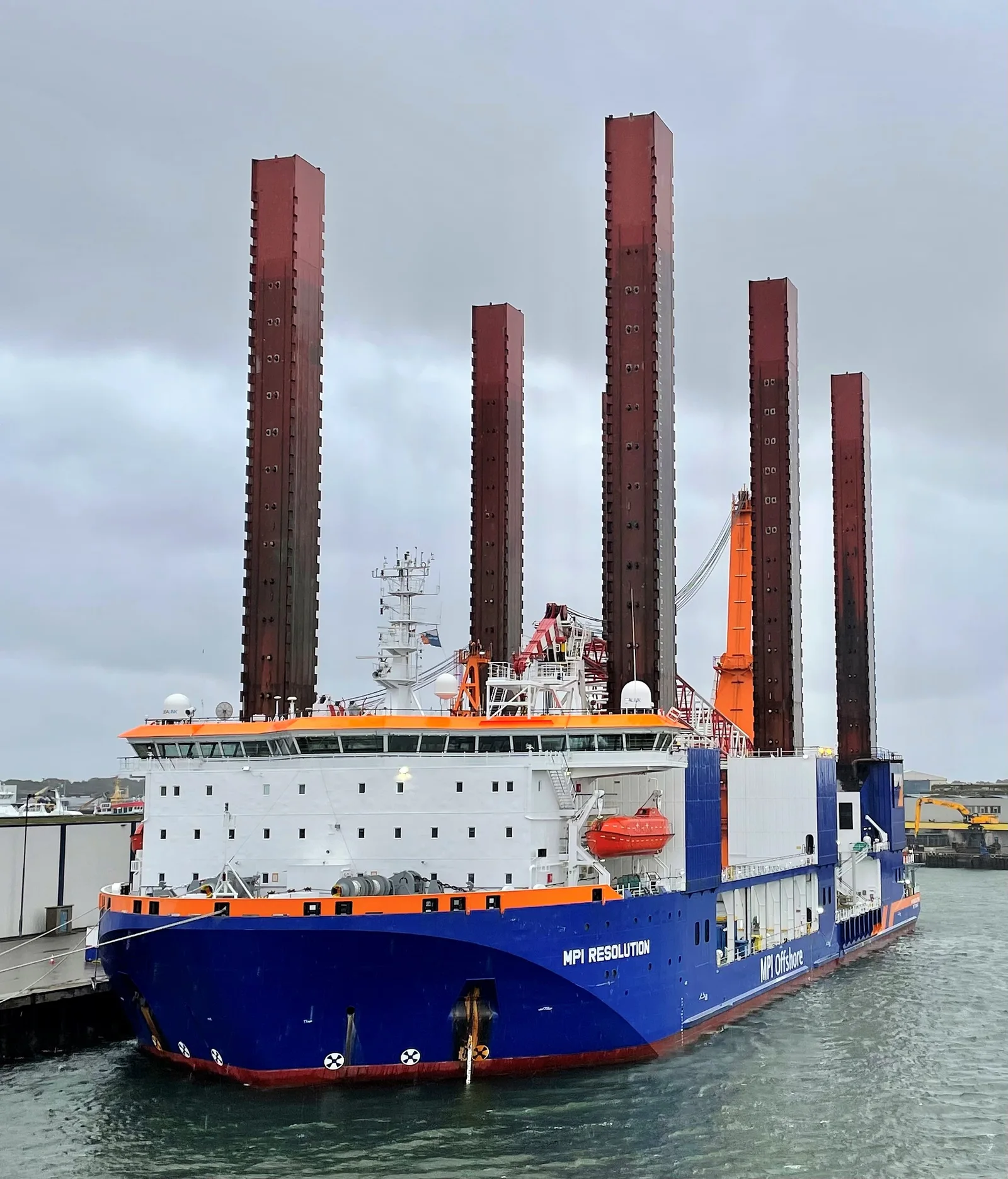
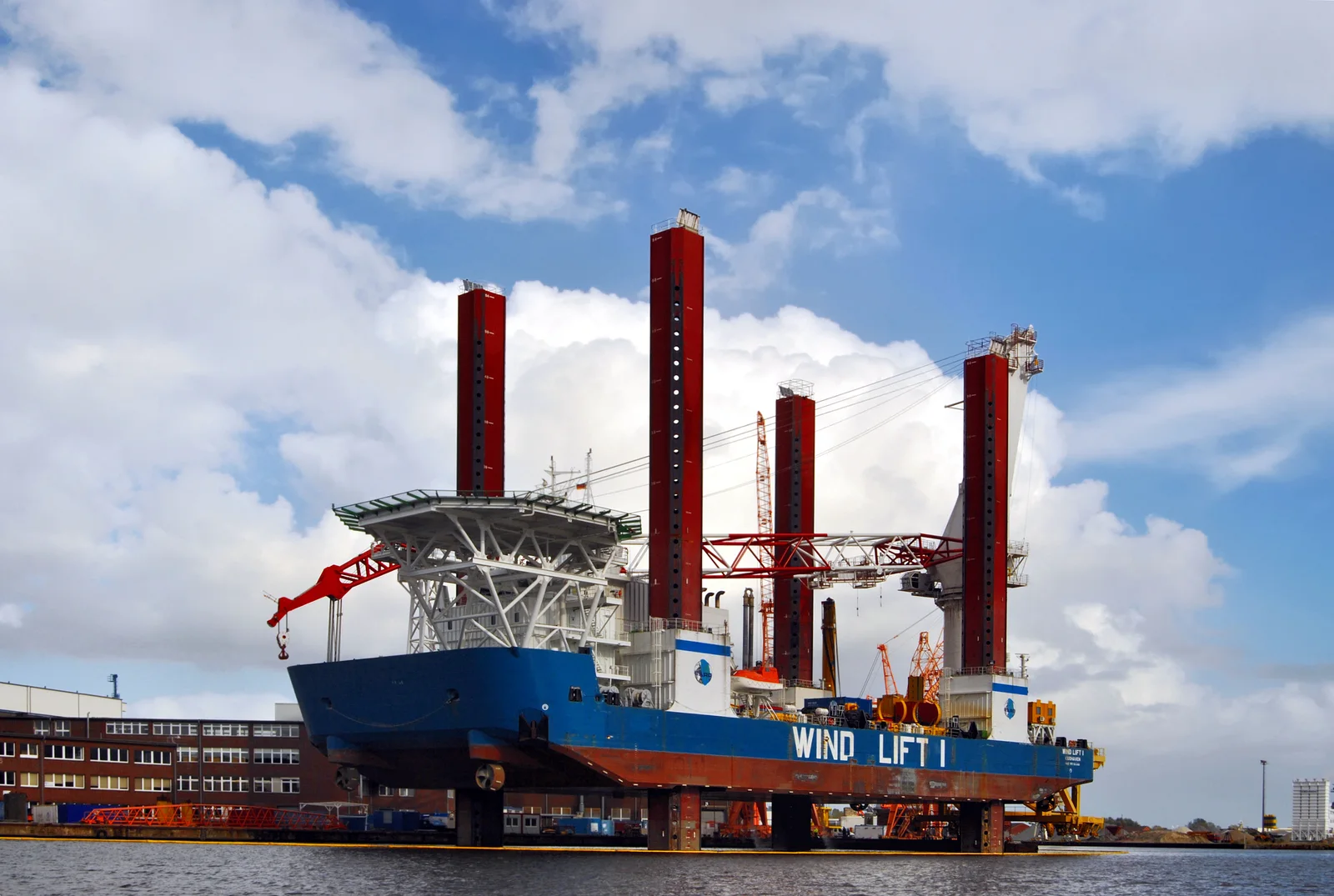
Vessel-market analysis has pointed toward a persistent shortage of specialized installation tonnage even as capacity targets have grown: Clarksons Research data cited in trade press indicates no new WTIV newbuild orders were placed industry-wide since 2023, even as day rates for existing installation vessels have risen to record levels. An earlier Rystad Energy forecast (dating from roughly 2022–2023, and increasingly dated by 2026) projected installation-vessel demand could run several times higher by 2030 than the levels seen at the time of that report: a striking number, but one that predates the US policy reversal described below and should be treated as a pre-2025 baseline rather than a current forecast.
The United States: Vessels Built for a Market That Then Paused
The clearest recent disruption to offshore wind vessel demand has occurred in the United States, and it happened in two distinct stages. A presidential memorandum issued 20 January 2025 paused new federal offshore wind leasing and permitting pending a policy review. In April 2025, the Bureau of Ocean Energy Management separately issued a stop-work order specifically on Equinor's already-under-construction Empire Wind project off New York; that order was lifted about a month later, in May 2025, after discussions with federal, state and city officials, and construction resumed. Equinor's second-quarter 2025 results then reported a $955 million impairment tied to its US offshore wind business: $763 million specifically against the Empire Wind 1 project and its South Brooklyn Marine Terminal, and $192 million against the undeveloped Empire Wind 2 lease, which the company attributed to regulatory changes and increased tariff exposure (steel tariffs alone were cited as adding roughly $300 million in cost to the project).
The disruption escalated again on 22 December 2025, when the Department of the Interior suspended federal leases for all five offshore wind farms then under construction on the US East Coast: Vineyard Wind, Revolution Wind, Sunrise Wind, Empire Wind, and Coastal Virginia Offshore Wind: citing national-security concerns about turbine interference with military radar, based on an assessment DOI's own announcement described as containing new classified information. Empire Offshore Wind LLC filed suit in federal court on 2 January 2026 challenging that December order and seeking a preliminary injunction to allow construction to continue; as of this writing, the practical, vessel-level outcome of that litigation is unresolved, and given how fast this situation has moved, it should be re-checked against current news before this article goes live.
This policy volatility is especially consequential for vessel economics because the US built its own Jones Act-compliant offshore wind fleet on the assumption of a steadily growing domestic pipeline. The Charybdis, developed by Dominion Energy and reported as the first US-flagged, Jones Act-compliant wind turbine installation vessel, was launched at the Seatrium AmFELS yard in Brownsville, Texas in April 2024, began sea trials in February 2025, and was built specifically to support Dominion's Coastal Virginia Offshore Wind project: one of the five projects whose federal lease was suspended in the December 2025 action described above. Its cost has been reported as rising from an original estimate of about $500 million to approximately $715 million. A single purpose-built vessel of this kind depends on a continuous pipeline of future US projects to be economically viable over its operating life; that its own home project is now among those directly caught in the federal suspension is a concrete illustration of exactly that risk, not a hypothetical one.
Europe: Steady but Slower Growth, With the UK Leading
Europe remains the largest and most mature offshore wind market by installed base, but 2025 growth was notably subdued. According to WindEurope's Autumn 2025 data release, Europe connected only about 2 GW of new offshore wind capacity in 2025: described by WindEurope as the lowest annual figure since 2016, attributed in part to construction and supply-chain delays: bringing cumulative European offshore capacity to roughly 39 GW. WindEurope noted that only three countries, the UK, Germany and France, commissioned any new offshore turbines in 2025. The UK alone is reported by RenewableUK to have around 16.5 GW of grid-connected offshore capacity as of 2025 plus roughly 11.7 GW under construction, against a stated national target of 43+ GW by 2030: a target that, on current build rates, appears difficult to reach without a marked pickup in both project consenting and installation-vessel throughput.
Crew Transfer Vessels: Real Demand Growth, Unreliable Market-Size Figures
At the smaller end of the fleet, crew transfer vessels (CTVs), used to ferry technicians to and from turbines for operations and maintenance, are widely expected to see rising demand simply as a function of the cumulative number of operating turbines requiring service, plus a documented trend toward hybrid and electric-propulsion CTV newbuilds for sustainability compliance. That said, commercial market-research reports on CTV market size found during this research disagreed with each other by roughly two orders of magnitude: figures ranged from around $100 million to several billion dollars for what is nominally the same global CTV market in the same year, which indicates inconsistent methodology and scope definitions across vendors rather than a genuine, reconcilable data point. No specific CTV market-size figure is reliable enough to publish here.
Reading the Two Segments Together
Superyachts and offshore wind vessels sit at opposite ends of the same shipyard capacity problem. The superyacht order book, after a pandemic-driven boom, is now easing gently from a record high: Boat International's own multi-year data shows two consecutive years of unit-count decline even as the average vessel gets larger and headline shipyard order books remain full for years out. Offshore wind vessels face close to the opposite problem: underlying long-term demand, as quantified by GWEC and echoed by Rystad Energy's vessel-shortage thesis, points toward strong multi-year growth in capacity and therefore in installation-vessel needs, but near-term demand, especially in the United States, has become hostage to policy reversals that have already idled construction twice in one year, cost one operator nearly a billion dollars in impairments, and cast direct doubt on the economics of purpose-built, Jones Act-compliant tonnage like Charybdis. Both segments illustrate the same underlying lesson for shipyard-capacity planning: a multi-year newbuild contract is a bet not just on demand growth, but on regulatory and macroeconomic conditions holding steady long enough for that demand to materialize on schedule.
For where these vessels are actually built - country by country - see our companion report: Where Superyachts and Offshore Wind Vessels Are Actually Built.
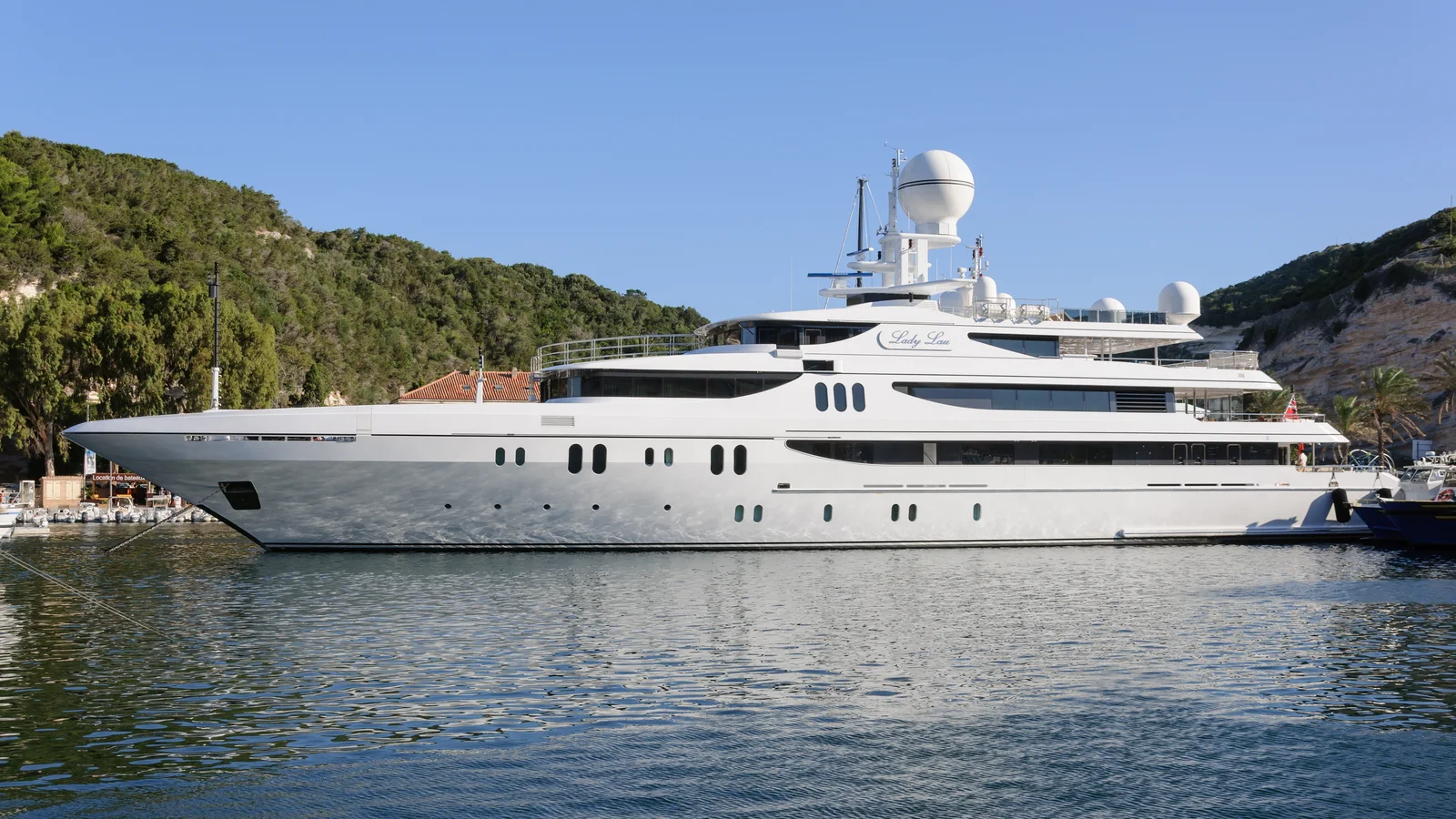
Cover photo: Myrabella, via Wikimedia Commons, licensed CC BY-SA 3.0.