English law and London-seated arbitration dominate superyacht dispute resolution. Why a globally mobile asset benefits from a neutral forum, and an honest look at where a yacht-specific arbitration body's actual role remains unconfirmed.
When high-stakes construction disputes arise during a superyacht build, they rarely play out in a public courtroom. Superyacht construction contracts, despite being executed across diverse international shipyards, almost universally designate English law as the governing legal framework and London arbitration as the binding dispute resolution forum. This arrangement is so pervasive that even when an Italian, Dutch, or German shipyard enters into an agreement with a buyer based in the United States or Asia, the contract typically points to London as the legal arena for resolving conflicts.
For project managers, owner's representatives, and shipyard contract administrators, understanding why this legal jurisdiction dominates the sector is worthwhile. Dispute resolution clauses are not passive administrative boilerplate appended to the end of a build contract. They shape how technical disagreements, delay claims, warranty disputes, and variation order conflicts are evaluated, fought, and settled. London arbitration's dominant position rests on two main pillars: an exceptionally mature body of maritime case law and strict procedural confidentiality.
Arbitration versus Ordinary Court Litigation
To understand why superyacht contracts favor arbitration, project management professionals should first understand how arbitration functions as a distinct mechanism compared to ordinary judicial litigation. Court litigation takes place in public tribunals presided over by state-appointed judges. Arbitration, by contrast, is a private, contractually agreed-upon dispute resolution process, where the disputing parties submit their conflict to an independent tribunal of one or three arbitrators whose final award is legally binding and enforceable internationally.
Several structural characteristics distinguish arbitration from standard court proceedings, making it well suited to complex marine engineering disputes:
- Party-selected domain expertise: ordinary court judges are generally legal generalists who may have little to no background in naval architecture, marine engineering, or shipyard operations. In arbitration, the parties select arbitrators who often have genuine, deep technical and commercial maritime expertise, such as experienced maritime lawyers, master mariners, or marine engineers.
- Strict confidentiality: court litigation is inherently public. Filings, financial figures, structural flaws, and witness testimony are matters of public record. Arbitration proceedings and their resulting awards, by contrast, are private and confidential, protecting the commercial reputation of the shipyard, shielding the financial privacy of high-net-worth buyers, and avoiding public speculation about a vessel's technical integrity.
- Procedural flexibility and speed: while complex arbitrations remain thorough, the process allows parties to tailor evidentiary rules and hearing schedules to the specific technical issues at hand, often avoiding the more rigid delays common in backlogged public court systems.
- Limited rights of appeal: under English arbitration law, the grounds for appealing an arbitral award are strictly limited, mainly to fundamental errors of law or serious procedural irregularity. This limitation provides finality, discouraging losing parties from dragging out disputes through years of appellate court litigation.
The Cross-Border Realities of Superyacht Projects
A superyacht is an inherently cross-border, globally mobile asset. A typical new build involves a web of international entities, creating a complex jurisdictional footprint long before the first steel plate is cut or composite mold is set. Consider the standard structure of a multi-million-dollar custom build:
- The shipyard is physically located in one nation, such as the Netherlands, Italy, or Germany.
- The ultimate beneficial owner is a citizen of another country, often operating through a special purpose vehicle registered in a third jurisdiction.
- The vessel's intended flag state administration may be located in a fourth jurisdiction.
- The owner's representative, interior designers, naval architects, and major equipment suppliers are scattered across multiple additional countries.
If a major technical dispute occurs, such as a disagreement over sea trial performance parameters, defective hull coating application, or significant delivery delays, determining which national court should hold jurisdiction becomes contentious. Neither party wishes to submit to the home courts of the other. Shipyards are often reluctant to litigate in the buyer's home nation, given unfamiliar legal procedures and the perception of foreign court bias. Buyers, in turn, tend to resist litigating in the shipyard's local municipal court, wary of a potential home-court advantage for a prominent local employer.
Choosing a neutral, internationally respected legal forum like London resolves this jurisdictional deadlock. It establishes a level playing field detached from the domestic political and legal systems of both the builder and the purchaser. International arbitral awards also benefit from global enforcement mechanisms, such as the New York Convention, which allows arbitration awards issued in London to be recognized and enforced across more than 160 contracting states. This provides a level of cross-border enforcement security that local court judgments rarely match.
Why English Law and London Hold the Dominant Market Position
London's status as the default seat for superyacht dispute resolution is not accidental. It is supported by a mature legal infrastructure that has evolved over centuries of global trade and maritime commerce. Non-English shipyards and international buyers routinely select English law and London arbitration because of specific systemic advantages that provide commercial predictability.
First, English commercial and maritime law offers an extensive, highly developed body of precedent. Centuries of litigation surrounding charter parties, bill of lading contracts, insurance policies, and commercial shipbuilding disputes have created a deep pool of established case law. When a legal clause or technical dispute arises, English law usually provides fairly clear, predictable guidance on how that issue will be interpreted. This legal predictability allows legal counsel and project managers to assess legal risk objectively before committing to expensive formal proceedings.
Second, London arbitration in the maritime sector is heavily anchored by the London Maritime Arbitrators Association (LMAA). While parties can draft customized arbitration rules, superyacht contracts frequently reference or adopt LMAA procedural frameworks, which provide standard terms and procedural guidelines specifically designed to manage maritime disputes efficiently, balancing thorough document disclosure with controlled timeframes.
Third, London hosts an unusually deep concentration of specialized maritime legal expertise: maritime law firms, experienced commercial barristers, qualified marine surveyors, and naval architecture consultants. This concentration of technical and legal talent means arbitral tribunals sitting in London are supported by specialized expert witnesses and legal advocates who understand the mechanics of shipbuilding contracts, milestone structures, and variation orders.
Finally, London's long-standing position as a global maritime hub reinforces this dominance. The presence of international marine underwriting markets, classification society representation, and marine insurance entities creates an ecosystem built around maritime risk management. Choosing London provides a degree of institutional comfort to financial institutions, mortgagees, and insurers underwriting the significant financial exposure of a custom superyacht build.
The Role of IYAC: An Unconfirmed Boundary in New-Build Disputes
Within discussion of superyacht dispute resolution, reference is occasionally made to specialized yachting institutions, such as the International Yacht Arbitration Council (IYAC). Given the niche nature of luxury yachting, professionals sometimes wonder whether specialized bodies like IYAC alter the dominance of traditional London arbitration in construction conflicts.
It is worth evaluating this role with clarity and honest caveats. Available industry research indicates that while IYAC exists as a yacht-specific dispute body, its practical application appears weighted toward brokerage, sale and purchase disagreements, and charter contract disputes. Its actual role and utilization in major, complex new-build construction disputes remain unclear and unconfirmed based on available research. This is a genuinely open question, not a settled fact this article can resolve.
In full-custom new-build projects, where claims can involve complex structural engineering, multi-year delay calculations, and intricate financial milestone disputes, major shipyards and international buyers appear to rely predominantly on established English law and LMAA-seated arbitration mechanisms. Project teams should not assume that specialized yacht brokerage arbitration bodies automatically govern custom new-build contracts. Unless explicitly written into the bespoke house contract, new-build disputes default to traditional London maritime arbitration frameworks. The actual reach of specialized yacht councils in high-value shipyard construction remains an open question that legal counsel should scrutinize on a project-by-project basis.
Project Management Takeaways for Contract Execution
The dominance of London arbitration carries direct operational implications for the daily execution of a superyacht project. A project manager or owner's representative should not treat dispute resolution as an abstract legal topic reserved for the end of a failed project. The evidentiary standards of London arbitration shape how the build should be documented from day one.
Because London arbitral tribunals rely heavily on written evidence, contemporaneous records, and expert technical testimony, the quality of project documentation directly affects the outcome of potential claims. The project management team should maintain disciplined records covering:
- Milestone sign-off certificates: detailed, dated verification reports prepared by the owner's representative before any milestone payment is authorized, establishing clear technical baselines.
- Variation order logs: transparent, contemporaneous documentation tracking requested design changes, line-item cost estimates, schedule impact calculations, and written approvals.
- Technical correspondence: formal written communications between the shipyard, technical representative, naval architects, and classification societies, rather than relying on undocumented verbal agreements.
- Daily shop-floor logs: progress tracking and photographic evidence recording physical construction state, material deliveries, and shop-floor delays.
London arbitration provides a mature, neutral, and strictly confidential framework for resolving the intense commercial conflicts that can emerge during a complex superyacht build. By understanding how English law interprets contractual obligations and how London arbitral tribunals evaluate technical evidence, project managers can structure their daily record-keeping to protect their client's financial investment and legal interests throughout the construction process.
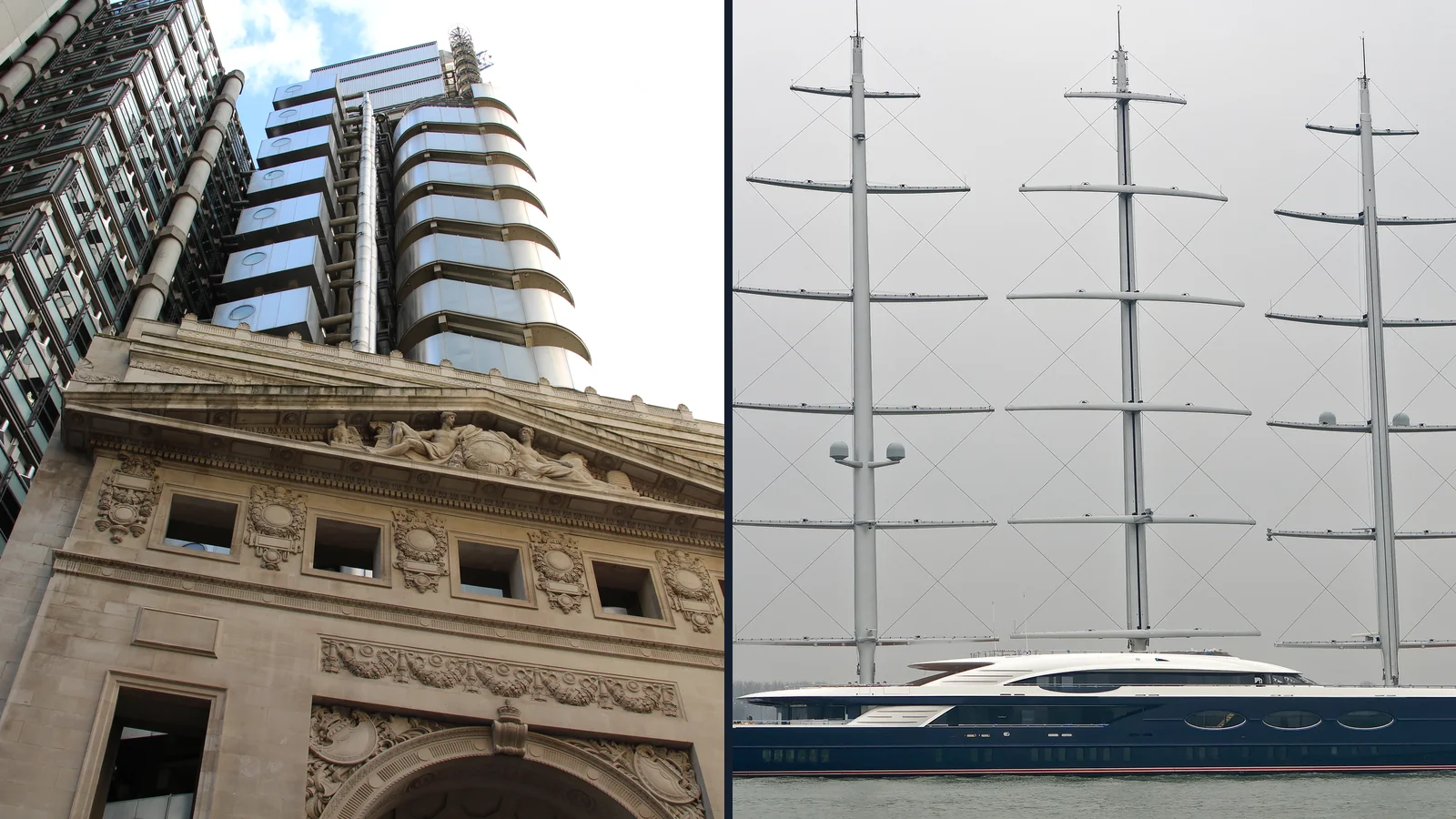
Cover photo: Lloyd's building photo by Fred Romero, via Wikimedia Commons, licensed CC BY 2.0; "Black Pearl" photo by Kees Torn, licensed CC BY-SA 2.0.