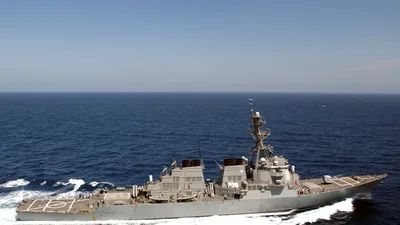
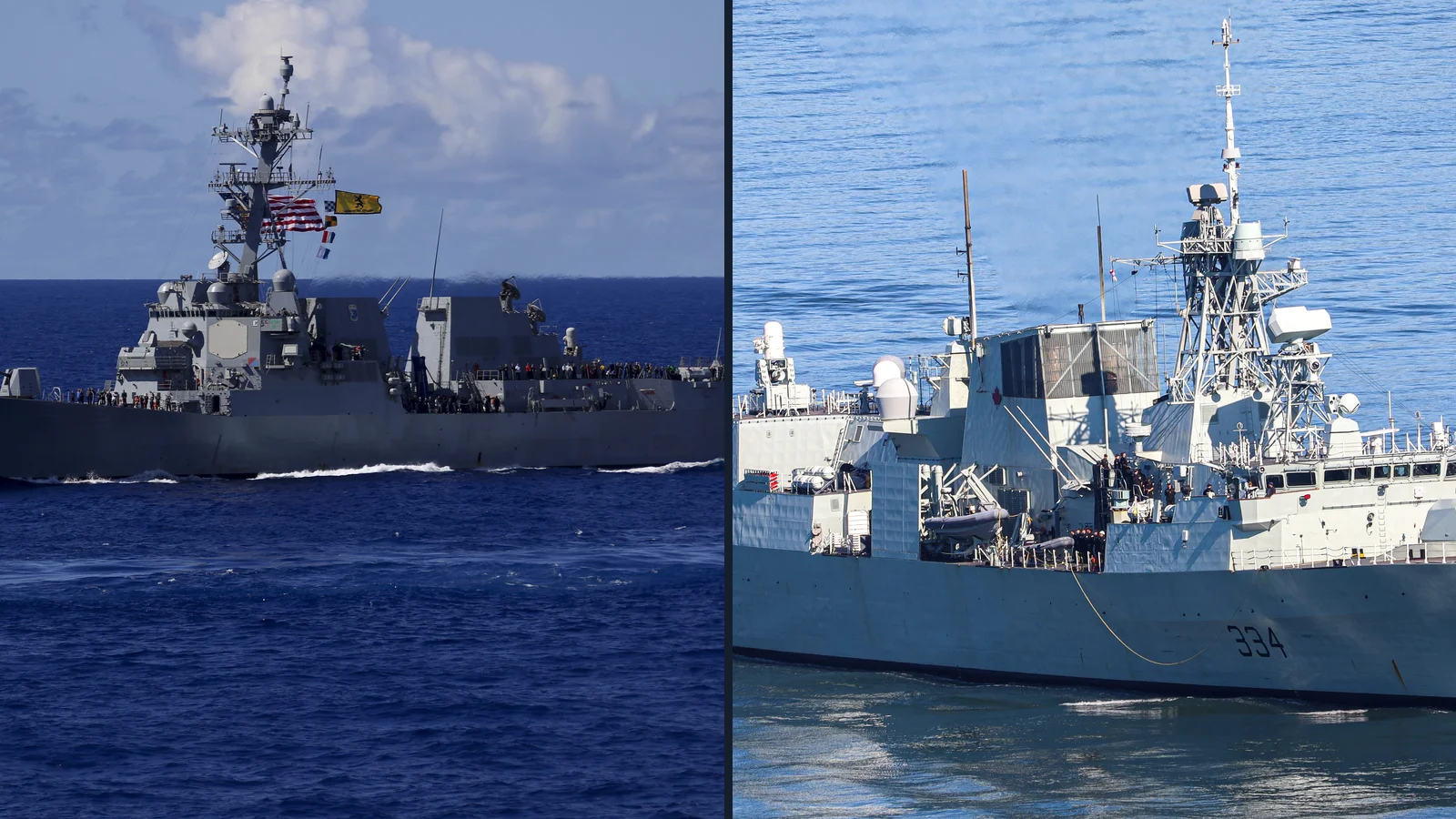
Two national philosophies for building warships: the US Navy's competitive multi-yard model versus Canada's long-term strategic-partnership approach under the National Shipbuilding Strategy.
Defense shipbuilding procurement represents one of the most complex capital project environments in modern engineering management. Navies must balance long-term force design requirements against domestic industrial capacity, technological integration risks, and severe fiscal constraints. While all Western defense acquisition systems share the goal of delivering sovereign maritime capability, the structural mechanisms used to execute these programs vary fundamentally between nations.
A direct comparison of defense shipbuilding in the United States and Canada reveals two distinctly different project management and contracting philosophies. The US Navy relies on program-by-program competitive procurements and industrial teaming models distributed across multiple established shipyards. Conversely, Canada’s National Shipbuilding Strategy (NSS) relies on long-term, exclusive strategic partnerships that assign entire vessel categories to dedicated yards for decades. Examining how these two systems structure risk, manage industrial capacity, and track cost performance provides critical insights into how high-level defense policy dictates contract architecture and project execution.
Canada's National Shipbuilding Strategy: The Strategic Partnership Framework
Canada launched its National Shipbuilding Strategy in 2011 to break a decades-long cycle of boom-and-bust naval procurement. Historically, periodic spikes in Canadian naval construction were followed by long operational lulls, forcing domestic shipyards to downsize or close, stripping the nation of skilled labor and infrastructure. When the government inevitably required new ships, it faced an uncompetitive, diminished industrial base and had to pay substantial recapitalization costs to restart domestic production.
To solve this structural boom-and-bust cycle, the NSS established a long-term framework centered on continuous production. Its defining feature is the selection of long-term strategic partners dedicated to specific vessel categories, rather than holding individual contract competitions for each new ship class or manufacturing tranche. Under this framework:
- Irving Shipbuilding (Halifax, Nova Scotia): Designated as the exclusive long-term strategic partner for combat vessel construction, including the Canadian Surface Combatant (CSC) fleet and Arctic and Offshore Patrol Ships.
- Seaspan’s Vancouver Shipyards (Vancouver, British Columbia): Selected as the long-term strategic partner for non-combat vessels, such as joint support ships and offshore oceanographic science vessels.
- Chantier Davie (Lévis, Quebec): Added in 2023 as a third strategic partner, primarily dedicated to building heavy icebreakers and specialized vessels for the Canadian Coast Guard.
In exchange for guaranteed long-term pipeline visibility, prime contractors under the NSS are bound by Canada's Industrial and Technological Benefits (ITB) policy. The ITB framework creates an explicit industrial offset obligation: selected yards must generate economic activity in Canada matching 100 percent of the total value of their awarded defense contracts. Program managers in the NSS framework must therefore track not only technical baseline compliance, earned value metrics, and delivery schedules, but also enforce indirect industrial investments and domestic supply-chain utilization across Canadian suppliers.
The US Navy Model: Competitive Allocations and Program Teaming
The United States Navy operates under a fundamentally different acquisition philosophy, reflecting its significantly larger defense budget, higher operational tempo, and broader industrial base. Rather than assigning exclusive shipyard monopolies per ship category for decades, the US Department of Defense distributes ship construction on a program-by-program basis among a pool of competing, highly specialized commercial defense yards.
To maintain industrial throughput and preserve domestic capacity across multiple shipbuilders, the US Navy employs dual-sourcing, split-buy awards, and structured inter-yard teaming arrangements under Federal Acquisition Regulation (FAR) guidelines:
- Multiyear Dual-Sourcing (Surface Combatants): For the Arleigh Burke-class destroyer program, the US Navy splits construction tranches under multiyear procurement contracts between two primary surface combatant yards: General Dynamics Bath Iron Works in Maine and Huntington Ingalls Industries (HII) Ingalls Shipbuilding in Mississippi. These yards compete for allocation share while maintaining parallel production lines for identical ship designs.
- Industrial Teaming (Submarine Construction): For the Virginia-class fast attack submarine program, the US Navy relies on an explicit industrial teaming arrangement between General Dynamics Electric Boat in Connecticut and HII Newport News Shipbuilding in Virginia. Rather than competing for separate hulls, the two shipbuilders construct specialized structural modules independently before shipping them via barge to alternate facilities for final assembly, test, and launch. (For a full walkthrough of how this actually works, see our article on the Virginia-class teaming model.)
The US philosophy uses program-specific competitive awards to maintain cost pressure and preserve redundant domestic manufacturing facilities. While the US Navy utilizes multiyear procurements to stabilize industrial planning across major programs, it refrains from granting any single shipyard an exclusive, permanent monopoly over a whole operational class of naval capability.
Execution Realities, Baseline Cost Metrics, and Performance Audits
Both acquisition philosophies face significant execution challenges, schedule growth, and cost inflation when managing long-duration naval builds. However, the mechanisms by which these programs track performance, establish cost baselines, and report progress reflect their specific structural frameworks.
Schedule Performance and Independent Audits in the NSS
Long-term strategic partnerships do not inherently shield acquisition programs from early schedule friction. In Canada, independent oversight reports have documented significant execution challenges across the NSS enterprise. Canada’s Office of the Auditor General (OAG) Report 2, published in 2021, conducted a comprehensive review of the strategy's delivery performance. The OAG found systemic delays across the NSS program that originated well before the global supply chain disruptions of the COVID-19 pandemic.
Specifically, the 2021 OAG report highlighted that out of four ships scheduled for delivery across the program by January 2020, only two had actually been delivered to the federal government by that deadline. Furthermore, both of the delivered vessels were turned over past their original contract delivery dates. The audit cited factors including slow initial infrastructure upgrades, complex design modifications, and delayed engineering approvals as major contributors to early delivery slippage.
Cost Baselines and Metric Reporting: The Canadian Surface Combatant
Managing public expectations and cost growth requires strict clarity regarding baseline metrics, particularly when distinguishing between capital hardware procurement costs and total ownership accounting. In Canada, the Parliamentary Budget Officer (PBO) provides independent economic analysis of defense acquisition expenditures. When reviewing major efforts like the Canadian Surface Combatant (CSC) program, the PBO produces distinct metrics that must be evaluated independently to avoid misinterpreting financial growth.
Acquisition-related cost estimates for the CSC program have shown steady upward revisions over time:
- In 2019, the PBO estimated the acquisition-related cost of the CSC program at approximately $69.8 billion.
- In February 2021, an updated PBO estimate revised this acquisition-related cost figure upward to approximately $77.3 billion, representing an 11 percent increase over the 2019 baseline.
Separately, in October 2022, the PBO published an expanded accounting figure estimating the CSC program's total 65-year life-cycle cost at $306 billion. It is vital to note that this $306 billion figure is explicitly a total life-cycle cost metric covering capital procurement alongside operating, personnel, maintenance, and sustainment expenditures across the entire operational service life of the class. Because it encompasses decades of operational expenses, it represents a structurally different financial metric from the 2019 and 2021 acquisition-only capital figures and cannot be directly compared against them without that caveat. These figures represent the most recent publicly available PBO estimates for the CSC program at the time of writing, as no subsequent PBO updates have been issued beyond October 2022.
Structural Tradeoffs: Capacity Protection vs. Competitive Pressure
Neither the US Navy’s competitive multi-yard procurement model nor Canada’s strategic partnership framework is inherently superior. Instead, each represents a deliberate set of project management and structural tradeoffs shaped by national industrial scale.
The Canadian Strategic Partnership Tradeoff
Canada’s model is tailored for a nation with a smaller domestic defense industrial base and limited overall order volumes. By eliminating recurring contract tenders for every new hull, the NSS offers clear benefits and distinct drawbacks:
- System Strengths: It provides predictable, continuous workload visibility to selected domestic shipyards. This guarantees that private yards can amortize capital investment in modern shipbuilding infrastructure over decades, retain skilled trades personnel during design transitions, and eliminate recurring tender costs.
- System Friction: By granting exclusive strategic partnerships per ship category, the framework significantly reduces competitive economic pressure. If a designated yard encounters management challenges, cost inflation, or execution delays, the customer faces severe structural barriers to re-competing or re-allocating work, making course-corrections slow and complex.
The US Competitive Teaming Tradeoff
The US Navy model relies on a much larger total force structure and substantial defense appropriations to maintain dual-sourcing across major combatant programs:
- System Strengths: Continuous program competition and multiyear split-buys maintain financial pressure on prime contractors, preserve redundant manufacturing capacity, and give the customer tactical flexibility to adjust hull allocation based on yard performance and shipyard capacity.
- System Friction: The US model introduces significant coordination complexity. Programs like the Virginia-class submarine require joint configuration management across independent corporate entities, shared engineering data environments, complex modular supply chains, and intricate work-share agreements to manage co-production seamlessness between competing facilities.
The PM Perspective: Cross-Border Unfamiliarity
For defense project managers and procurement specialists transitioning between these two defense contracting environments, the opposing underlying philosophies create distinct structural learning curves.
What a Canadian Commercial/Defense PM Finds Unfamiliar in the US System
A defense project manager accustomed to Canada's National Shipbuilding Strategy entering the US Navy acquisition enterprise would find several operational dynamics counterintuitive:
- Continuous Competitive Allocation: In the US system, securing a contract for a ship class does not guarantee execution of the entire build run. PMs must constantly manage operations around split-buy award decisions, where poor schedule performance on one tranche directly results in reduced hull allocation in subsequent multiyear awards.
- Complex Inter-Yard Interfaces: Managing co-production programs like the Virginia-class requires PMs to coordinate design authority, module transport schedules, and physical interface tolerances with a commercial competitor, requiring detailed teaming governance that does not exist under a single designated strategic yard model.
- FAR/DFARS Contracting Mechanics: The highly legalistic structure of the Federal Acquisition Regulation, including formal source-selection evaluations, standard cost accounting standards, and protest mechanisms, creates a rigorous competitive environment throughout project execution.
What a US Commercial/Defense PM Finds Unfamiliar in Canada's System
Conversely, a US acquisition manager moving into the Canadian NSS framework would encounter distinct administrative requirements:
- Socioeconomic Offsets (ITB Mandates): Unlike standard FAR-based contracts where domestic preference is regulated through source restrictions, the Canadian ITB policy obligates prime contractors to track and generate domestic offset activity equal to 100 percent of contract value. PMs must manage complex compliance matrices covering Canadian regional economic benefits and technology transfers alongside core engineering baselines.
- Absence of Internal Re-Competition: Once a strategic partner shipyard is selected under the NSS, the customer does not issue open competitive tenders for subsequent programs within that vessel category. PMs must navigate sole-source negotiations and strategic framework agreements rather than relying on market competition to drive contract pricing.
- Long-Term Shared Infrastructure Amortization: Contract administration involves deep public-private partnership mechanics, where public funding directly supports shipyard capital infrastructure investments to build foundational domestic industrial capability before major production can begin.
Industrial-Base Strategy Drives Contract Architecture
The contrast between the US Navy procurement philosophy and Canada's National Shipbuilding Strategy illustrates a foundational rule of defense project management: industrial-base strategy determines contract architecture. Contracting mechanisms are not selected in a vacuum based purely on project-level efficiency; they are designed to suit the structural capacity of a nation's defense industrial base.
The US framework uses competitive awards, split-buys, and multi-yard teaming to maintain dual-source industrial capacity and market discipline across a broad shipyard base. Canada’s strategy uses long-term strategic partnerships to eliminate boom-and-bust cycles and guarantee workload survival for a smaller industrial footprint, accepting lower competitive pressure in exchange for sovereign production security.
Ultimately, project managers operating in either domain must recognize that program performance, cost tracking metrics, and schedule management are directly shaped by these macro-level choices. Whether managing dual-source production tranches under FAR guidelines or enforcing dollar-for-dollar ITB obligations within a strategic partnership, defense procurement success depends on aligning project control systems with the overarching national acquisition strategy.
Cover photo: U.S. Navy (public domain) and HMCS Regina, photo by MarkjF31, via Wikimedia Commons, licensed CC BY-SA 4.0.