The critical path on paper isn't always the real constraint, when the dock crane can only lift one block a day, the schedule has to bend around it.
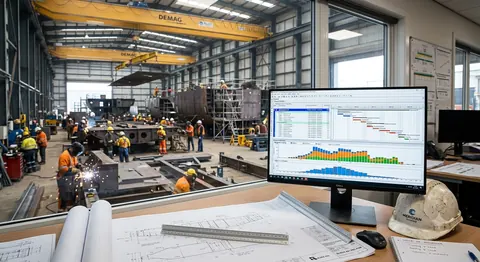
A pure CPM network assumes every activity can start the moment its predecessors finish, with unlimited resources standing by. A shipyard never works that way, there is one dry dock, a fixed number of heavy-lift cranes, and a finite pool of qualified welders and fitters. Resource leveling is the discipline of reconciling the logical schedule from the previous lesson with what the yard can physically execute, and on most newbuild projects it changes the real critical path more than people expect.
Why Resource Constraints Change the Critical Path
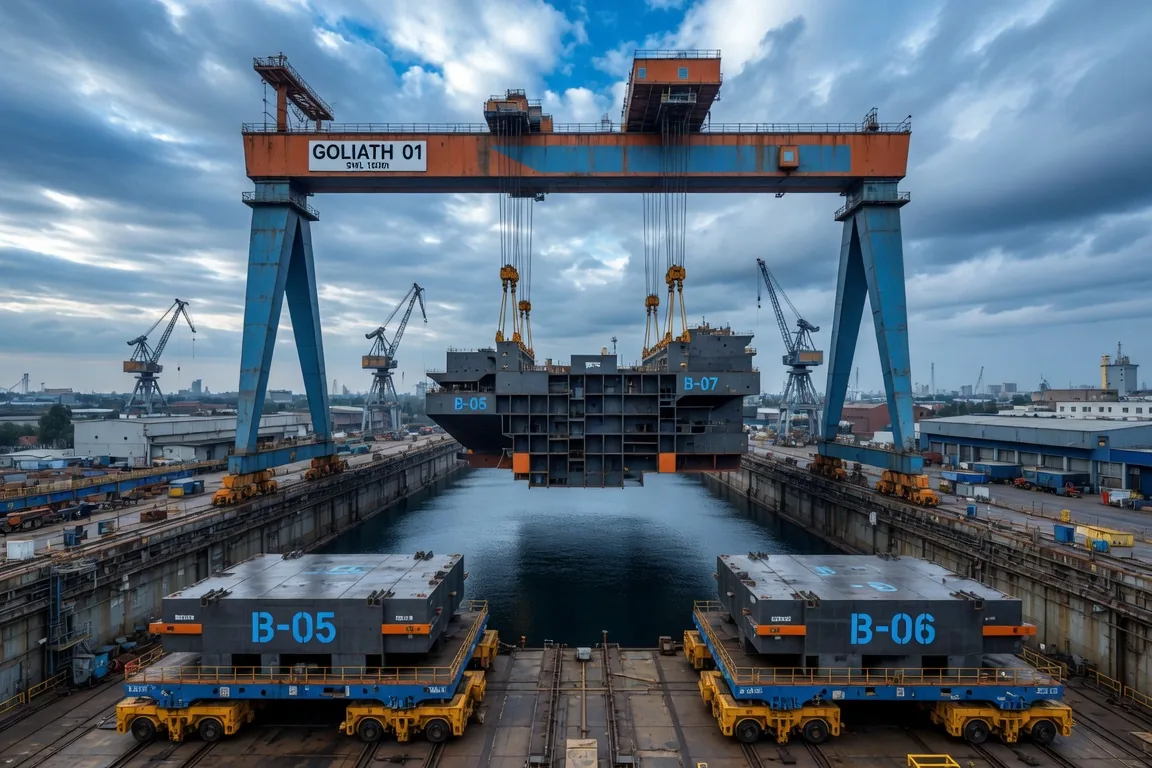
Two blocks can both be logically ready for erection on the same Monday with plenty of float between them and the next milestone, but if only one crane lift per day is available, one of them must slip, whether or not it has float on paper. Once that block slips, its own downstream activities inherit a new, resource-driven start date that a logic-only CPM calculation never predicted. This is why a schedule that "looks fine" on float alone can still blow through its delivery date: the constraint was never really the logic, it was capacity.
Identifying the Real Bottleneck Resources
Not every resource needs leveling, only the ones that are genuinely scarce relative to demand. On most newbuild projects, four resources are worth modelling explicitly:
- Dock crane(s): a hard daily or weekly lift capacity, often the single tightest constraint during the erection phase.
- Dock space itself: the dock can only hold one hull (or a fixed number of berths) at a time, this drives when the next vessel's keel can be laid, not just this vessel's own schedule.
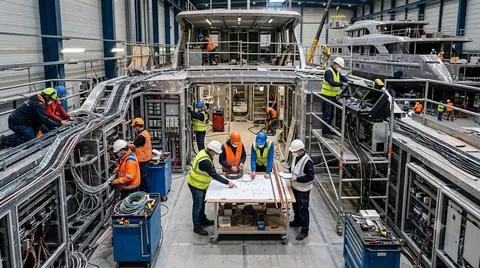
- Skilled welder / fitter headcount: particularly qualified welders for specific joint types and positions, which can bottleneck block fabrication even when panel line throughput looks adequate on paper.
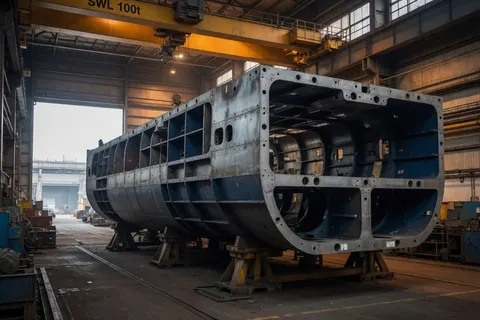
- Panel line throughput: a physical output rate (panels per week) that caps how fast sub-assemblies can feed block assembly, regardless of how many people are assigned.
Everything else (office space, minor equipment, non-critical trades) is rarely worth the modelling effort. Level the resources that are actually scarce, and leave the rest to normal task assignment.
Resource Leveling Techniques
- Delay non-critical activities into their existing float. The cheapest form of leveling, if an activity has 10 days of float, using 3 of them to avoid a resource clash costs nothing on the overall schedule.
- Split lifts or work across shifts. Adding a second shift on a genuinely constrained resource (crane operation, welding) can absorb a peak without extending the calendar duration of the project.
- Re-sequence parallel blocks. Where two blocks compete for the same crane and neither has enough float to fully absorb the clash, deliberately re-ordering which one goes first (based on which has less float, or which unlocks more downstream work) is better than letting the conflict resolve itself arbitrarily.
- Accept schedule extension only as a last resort. If leveling within float and shift options genuinely can't resolve a resource conflict, the project schedule needs to extend to reflect reality, better to surface that early than to carry an unachievable date.
A Worked Example
Three blocks (X, Y and Z) are all logically ready for erection in the same week, but the yard has one crane capable of one erection lift per day, and the week has five working days. Block X sits on the critical path with zero float; Y has 4 days of float; Z has 9 days of float. The leveling decision is straightforward once you look at float rather than just readiness: erect X first (day 1, no float to spend), then Y (day 2, consuming 1 of its 4 float days, still safe), then Z (day 3, consuming 2 of its 9 float days, very safe). No project delay results, because the leveling absorbed the crane constraint entirely within existing float. Had all three blocks been zero-float, at least one would have had to slip the finish date outright. Which is exactly the situation a resource-unaware CPM schedule would never have warned you about in advance.
Building a Simple Capacity Model
You don't need specialized software to catch most resource conflicts early. A weekly crane-lift budget (how many lifts the dock crane can realistically perform each week) compared against the number of erection activities the logical schedule demands that same week is enough to spot overloads months in advance, while there's still float and re-sequencing room to absorb them quietly. Build this as a simple running total per week per constrained resource, and review it at every schedule update alongside the critical path itself, a resource overload three months out is a planning problem; the same overload three weeks out is a crisis.
When to Add Capacity vs. Re-Sequence
Re-sequencing is free, it costs planning time, not money. Adding capacity (a second shift, hiring more welders, renting an additional crane) costs real money and often has its own lead time. The right order of operations is: exhaust float-based leveling and re-sequencing first, quantify exactly how much of a true delay would remain, and only then evaluate whether the cost of added capacity is justified by the value of the schedule time it recovers, usually by comparing it against the cost of a corresponding slip in the delivery date.