Why the single biggest lever for shortening dock time is finishing more of the ship before the block is ever erected, and how to plan for it.
Dock time is the most expensive, most constrained resource a shipyard has. Every day a hull occupies the dock is a day no other vessel can use it, and work performed inside a closed-up hull is slower, harder to access and more expensive than the same work performed on an open block in a workshop. Pre-outfitting is the discipline of shifting as much work as possible out of the dock and into the block stage, and it is consistently the single biggest lever available for compressing a newbuild schedule.
The Four Pre-Outfitting Levels
Most yards grade pre-outfitting on a simple four-level scale, and it's worth using consistent language across engineering, planning and production so a "Level 3 block" means the same thing to everyone:
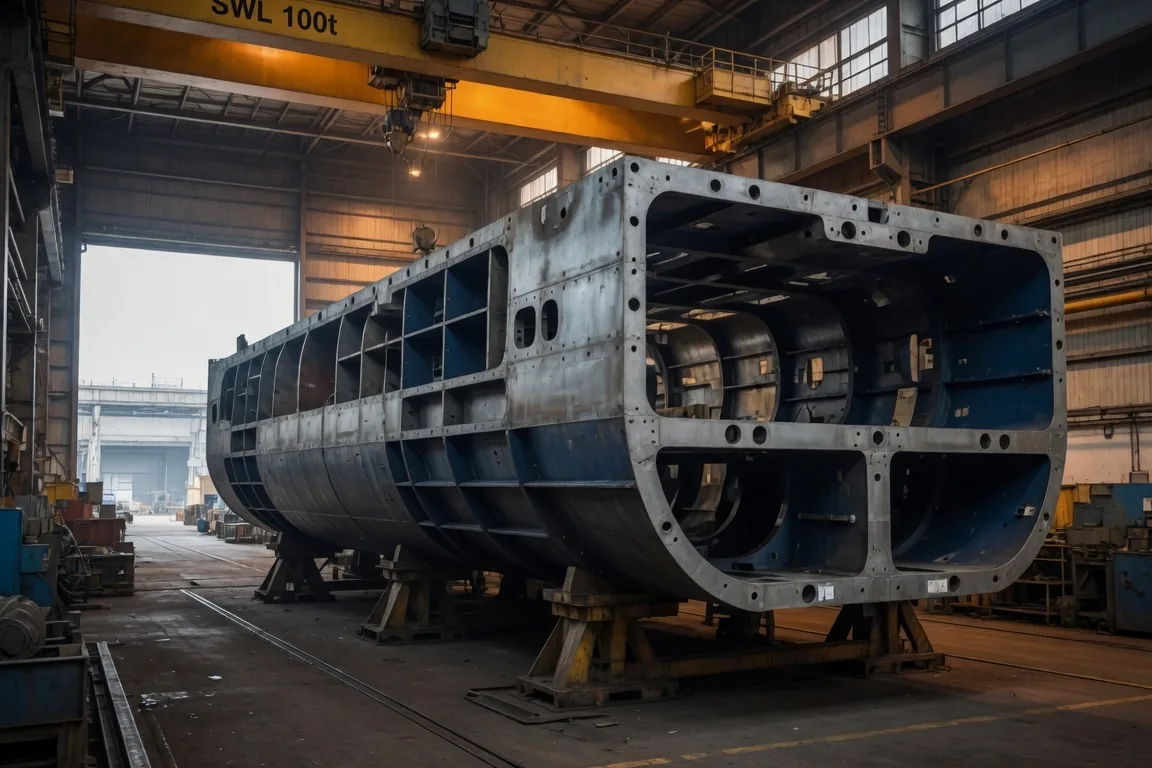
- Level 1: Structural Only: steel structure, foundations and major penetrations. Minimal systems work.
- Level 2: Basic Systems: major pipe runs, cable trays, HVAC ducting and primary foundations. Typical baseline for hull and deck blocks.
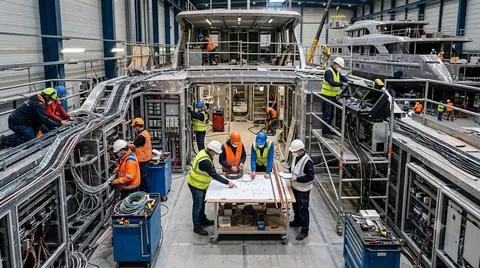
- Level 3: Advanced Systems: complete piping with valves and fittings, electrical distribution, lighting, insulation and equipment installation. The standard target for engine room and technical blocks.
- Level 4: Commissioning Ready: systems pressure-tested and functionally tested, ready for integration testing immediately after erection. Reserved for the most advanced yards on selected modules.
The jump from Level 2 to Level 3 is where most of the schedule benefit lives, because it moves the work that is genuinely difficult to do in a confined, erected hull (valve and fitting installation, cable termination, insulation) into a stage where a fitter has full access from every side.
Setting Realistic Targets by Block Type
Not every block should chase the same target. Engine room and auxiliary machinery blocks carry the highest system density and the worst post-erection access, so they justify pushing hard for Level 3. Accommodation and operational spaces can often reach Level 2.5, outfitted enough to save real time without over-investing in areas with lower system density. Pure hull and deck blocks, where there's comparatively little to install beyond structure and some cabling, are usually fine at Level 2; chasing Level 3 there rarely pays back the extra pre-erection time.
The Coordination Challenge
Pre-outfitting only works if design information arrives before the block needs it, not after. Piping isometrics, cable schedules and equipment layouts have to be released early enough that fitters can work from approved drawings at the block stage, if that information is still being finalized when the block closes up, the "pre-outfitting" reverts to conventional after-erection work, just later and more expensive. This is why pre-outfitting targets are really an engineering release schedule problem as much as a production one: agree the target level per block early, then back-schedule the design deliverables needed to support it, the same way you'd back-schedule procurement from an erection date.
Common Pitfalls
- Late design changes. A late owner variation or class comment that touches an already-outfitted block is far more expensive to implement than the same change on an open panel, budget extra scrutiny and freeze dates specifically for high-outfit blocks.
- Access loss once panels close. Once a block's shell plating or deck is welded on, the access that made high-level outfitting efficient disappears. Sequence internal outfitting to finish before structural closure, not after.
- Coating sequence conflicts. Final coating typically happens after most outfitting to avoid damage to paint from fitting work, but blast and primer coating has to happen early enough not to bottleneck the panel line. Plan the coating stages explicitly rather than leaving them to be scheduled around whatever's convenient.
- Treating the target as fixed regardless of actual readiness. If design information genuinely isn't ready, forcing a block to "hit Level 3" on schedule just pushes rework into erection. It's better to formally step the target down for that specific block than to pretend the target was met.
Measuring Pre-Outfitting Progress
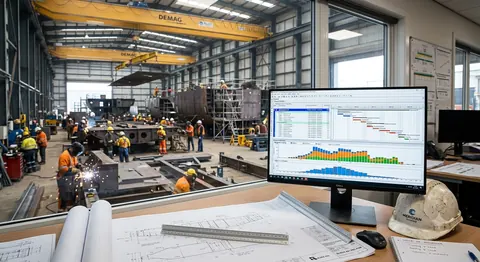
Track percent-complete per system (piping, electrical, HVAC, insulation, equipment) within each block rather than a single blended number, a block that's 90% complete on piping but 20% on electrical isn't "55% outfitted" in any useful sense, and blending the numbers hides exactly the information a planner needs to intervene. Roll individual system percentages up to a block-level dashboard, and roll blocks up to an overall pre-outfitting index for the vessel so the trend is visible at the program level, not just block by block.
Our Inspection & Test Plan Template is a useful companion here, hold and witness points for piping and electrical systems naturally line up with the pre-outfitting completion checkpoints described above.
See also: Shipbuilding Project Lifecycle: An Overview, and Block Construction and Erection Sequencing.