The main engine you order in month one decides your delivery date in year two. Newbuild procurement is schedule management wearing a purchasing hat.
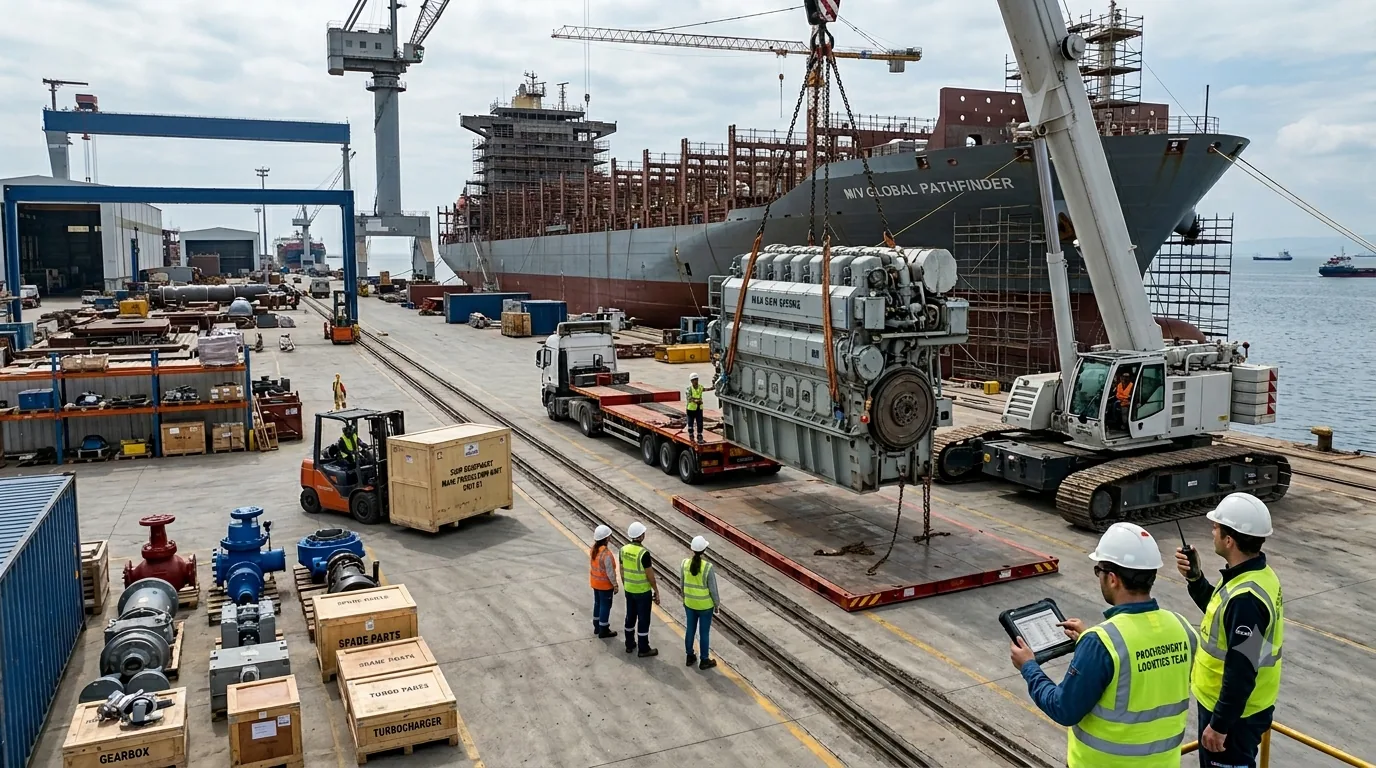
The main engine ordered in month one of a contract is often the single item most responsible for the delivery date in year two or three. Major equipment, main engines, generators, boilers, steering gear, integrated navigation and automation packages, carries lead times that can run well over a year for some engine models, is subject to class approval on top of the manufacturer's own schedule, and typically represents a large share of total vessel cost, commonly cited in the region of a quarter to well over a third depending on vessel type and how much of the outfitting package is bundled with it. A schedule that treats this procurement as a purchasing task rather than a critical-path planning problem is exposed to the risk from day one, whether or not anyone notices it yet.
Why "Order It Early" Isn't Specific Enough
Every procurement guide says to order long-lead equipment early. The more useful question is: early relative to what? The real deadline isn't the contractual delivery date, it's the date working backward from required on-board installation, through factory acceptance testing, class survey, shipping, and site commissioning, each of which has its own duration that has to be subtracted before arriving at the actual latest safe order date. An equipment schedule built forward from "when we get around to placing the order" instead of backward from the required on-board date is how a technically-early order still ends up being too late.
What Actually Causes Equipment-Driven Schedule Slips
- A supplier's own production slot gets overcommitted across multiple customers. The order was placed on time; the manufacturer's capacity to actually execute it on schedule wasn't independently verified beyond taking their quoted date at face value.
- Class approval is treated as the supplier's problem, not a tracked milestone. Type approval status or the plan for individual survey should be confirmed at order placement, not discovered as a gap when the equipment is ready to ship and the paperwork isn't.
- An interface change on the vessel side isn't communicated to the equipment supplier promptly. A foundation or connection point that shifts after the equipment's mechanical design is frozen creates a mismatch that surfaces at installation, not before.
- A performance non-conformity is discovered at factory acceptance test, not before. Waiting until FAT to verify a performance guarantee that could have been checked against interim test data earlier compresses the response time to whatever's left before the required ship date.
Supplier Selection: Beyond the Reference List
Technical capability and past delivery reliability matter, but a supplier's current order book relative to their production capacity is often the more predictive factor for THIS project's delivery risk, a manufacturer with an excellent track record can still be overcommitted right now. Financial stability review matters for the same reason bank guarantees matter on the commercial side: a supplier in financial distress is a schedule risk regardless of how good their engineering is.
Class Approval Is Part of the Procurement Schedule, Not a Separate Track
Whether equipment needs type approval or individual survey should be settled at the specification stage, not discovered later, and the purchase order itself should specify class survey requirements and expected inspection touchpoints so the manufacturer is scheduling around them rather than treating a class visit as an unplanned interruption to their production line.
Building an Equipment Procurement Schedule That Actually Connects to Production
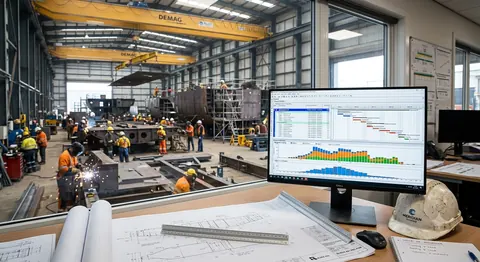
A dedicated equipment procurement schedule only earns its keep if it's genuinely integrated with the WBS and construction schedule, not maintained as a parallel spreadsheet that gets reconciled occasionally. Equipment delivery dates need to drive, and be driven by, the actual installation sequence: a main engine delivered on its contractual date but two weeks before the engine room block is structurally ready to receive it isn't a procurement success, it's a storage and protection problem the yard now has to manage.
Where Risk Actually Needs to Be Managed, Not Just Registered
Buffer time for critical items only works as risk mitigation if it's real slack in the schedule and not immediately consumed by optimistic downstream planning. An approved alternative supplier is only a genuine mitigation if switching to them mid-contract is realistically fast enough to matter, for many specialized components, a "backup supplier" that would itself need 12+ months to deliver isn't mitigating the risk it's listed against.
Equipment procurement functions as schedule management wearing a purchasing hat: the paperwork, POs, guarantees, class documentation, matters, but what actually protects the delivery date is treating every major order as a genuine dependency in the construction schedule from the day it's placed, not from the day the equipment shows up at the yard gate.